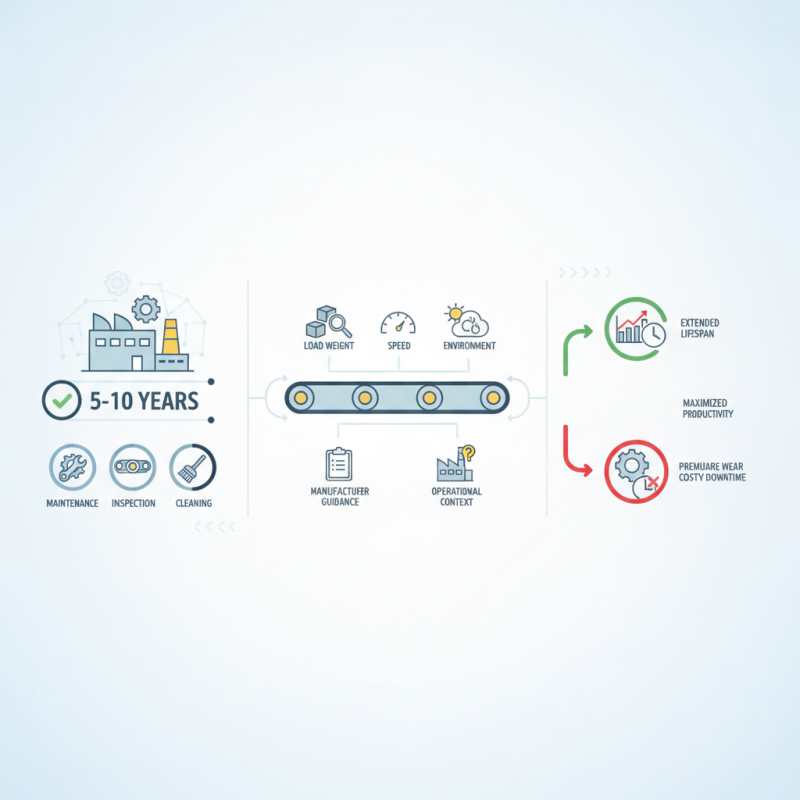
Conveyor belts are vital in many industries, from manufacturing to logistics. Understanding how long does a conveyor belt last is crucial for maintenance and planning. According to a report by the Conveyor Equipment Manufacturers Association, properly maintained belts can last between 5 to 10 years. However, this lifespan varies based on usage and environment.
Factors like load weight, speed, and exposure to harsh conditions directly affect durability. A belt used in a harsh environment may wear out faster than one in a controlled setting. The International Journal of Advanced Manufacturing Technology suggests that periodic inspections can prevent unexpected failures. Regular maintenance is key to extending the lifespan.
It is essential to consider both manufacturer guidance and real-world experiences. Anecdotal evidence shows that premature wear can arise even with quality belts. An understanding of your specific operational context can provide insights into how long does a conveyor belt last in your situation. This reflection helps manufacturers avoid costly downtime and maximize productivity.
The lifespan of a conveyor belt is influenced by several crucial factors. Material quality plays a significant role. High-quality belts can last up to ten years, while lower-quality options may only last three to five years. According to industry reports, regular maintenance is essential, as neglected equipment often suffers more wear and tear.
Operational conditions also affect belt longevity. For example, extreme temperatures and humidity can weaken materials faster. Additionally, the load capacity and speed of the conveyor contribute to wear. A report from the International Conveyor Belting Association states that belts transporting heavy materials tend to degrade quicker.
Finally, installation and alignment are critical. Poorly aligned belts face increased friction and misalignment, leading to premature failure. Many companies overlook this aspect. Regular inspections and adjustments can prevent unexpected breakdowns, ensuring that the equipment lasts longer. Inadequate attention could result in costly repairs and downtime.
| Factor | Description | Average Lifespan (Years) | Maintenance Level |
|---|---|---|---|
| Material Quality | Higher quality materials enhance durability. | 5-10 | High |
| Load Capacity | Belt lifespan decreases when carrying near maximum loads. | 3-7 | Moderate |
| Speed | Higher speeds can lead to increased wear and tear. | 3-6 | Variable |
| Operating Environment | Dust, moisture, and temperature extremes affect lifespan. | 2-5 | High |
| Alignment | Misalignment can cause uneven wear and shorter lifespan. | 4-8 | High |
| Installation Quality | Proper installation is critical for long-term performance. | 4-9 | High |
| Usage Frequency | Regular use without downtime can reduce lifespan. | 3-6 | Low |
| Temperature Variability | Extreme temperature fluctuations impact material integrity. | 2-5 | High |
| Regular Maintenance | Scheduled checks and adjustments extend belt life. | 5-10 | High |
| Belt Type | Different types (e.g., modular, rubber) have varying lifespans. | 3-10 | Variable |
: Material quality significantly impacts lifespan. High-quality belts last longer than low-quality options.
Regular maintenance is essential. Neglected equipment wears out faster.
Yes, extreme temperatures and humidity can weaken materials quickly.
Look for fraying edges, cracks, or tears. These indicate compromised integrity.
Slippage during operation suggests problems. Uneven material distribution is also a warning.
Yes, dust and debris accelerate wear. Keep the workspace clean to prolong lifespan.
Regular inspections are crucial. They help catch issues early before they escalate.
Waiting too long can lead to costly repairs and significant downtime.
Poor alignment leads to increased friction, causing premature failure and additional wear.
Unusual noises and performance inconsistencies indicate underlying problems that need attention.
Understanding how long does a conveyor belt last is crucial for optimizing operations in various industries. The lifespan of a conveyor belt is influenced by several factors, including the type of material being transported, load weight, belt speed, and environmental conditions such as temperature and humidity. Typically, different types of conveyor belts have varying lifespans, with some designed for heavy-duty use lasting longer than those meant for lighter applications.
To maximize the longevity of a conveyor belt, it’s important to recognize the signs indicating when it needs replacement, such as significant wear, cracking, or misalignment. Implementing regular maintenance practices—such as cleaning, tension adjustments, and inspections—can significantly extend the lifespan of these systems. Moreover, understanding the impact of the operational environment, such as exposure to chemicals or abrasive materials, is essential for ensuring durability and efficiency in conveyor belt performance.

 Trakkx Tech