7 Best Ways to Choose Conveyor Belts for Heavy Loads?

Time:2026-09-29 Author:Amelia
0%

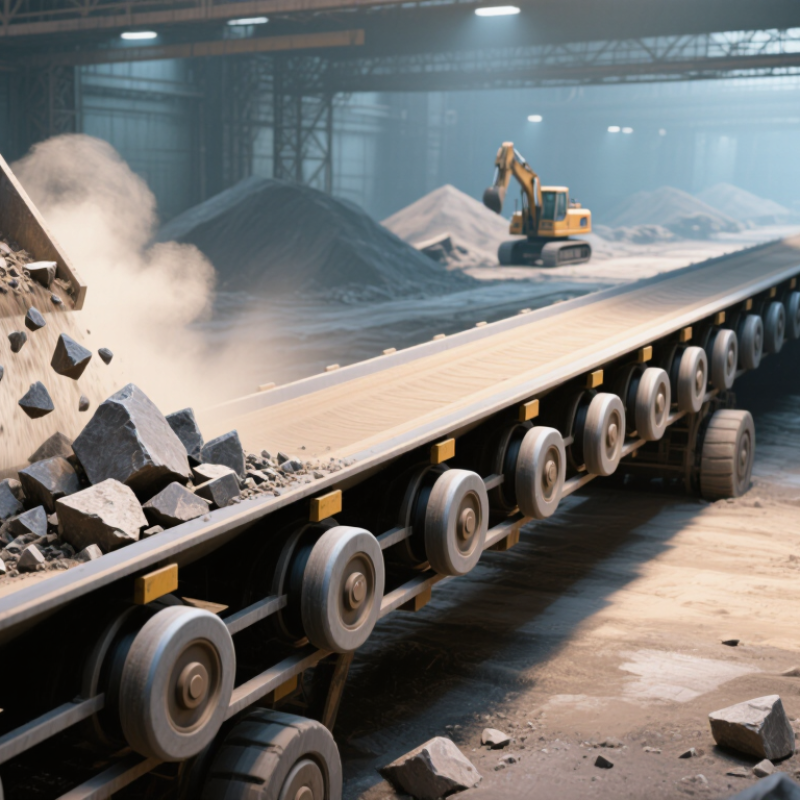
Choosing a conveyor belt for heavy loads is not a simple catalog decision. The wrong belt can stretch, mistrack, tear, or suffer premature edge damage. In a busy quarry, mine, or bulk-handling plant, these failures can stop production within minutes. They can also leave spilled material beneath transfer points and around return rollers.

So, how to choose conveyor belts for heavy loads? The answer begins with the application, not the belt price. You need to examine load weight, material sharpness, belt width, incline, speed, impact energy, and operating temperature. Belt strength matters, but it is only one part of the decision. Cover grade, carcass construction, splice design, and troughing performance deserve equal attention. A belt that survives heavy tonnage may still perform poorly under severe impact or repeated misalignment.

R. Todd Swinderman, a respected conveyor safety and engineering specialist, has often emphasized, “Conveyor safety is a process, not a project.” The same thinking applies to belt selection. Choose for the entire system. Not one component.

This guide explores seven practical ways to compare belt options for demanding loads. It considers real operating conditions, including falling rock, wet material, dust, cold starts, and long conveying distances. Some recommendations may seem obvious. They are often missed. A careful selection process can reduce unplanned downtime, extend belt life, and make maintenance more predictable. Still, no belt is perfect. Field data, inspection records, and honest performance reviews may change the final choice.
7 Best Ways to Choose Conveyor Belts for Heavy Loads?

Define the Load, Material, and Operating Conditions

Define the load before comparing belt ratings. Record the maximum mass per metre, lump size, edge sharpness, moisture, and drop height. A wet, sticky ore behaves differently from dry gravel, even at the same weight. USGS Mineral Commodity Summaries 2024 reports U.S. crushed-stone production at about 1.5 billion tons in 2023. That scale makes accurate material-flow estimates essential. Averages alone can mislead.

Then map the operating conditions: belt speed, incline, loading pattern, temperature, and start-stop frequency. CEMA’s Belt Conveyors for Bulk Materials and ISO 5048 calculate capacity and power using factors such as material density, belt speed, and conveyor geometry. A sharp transfer-point impact may cause more damage than steady carrying. Measure it. Field observations are valuable, though they are sometimes incomplete; revisit assumptions after seasonal changes or process upgrades.

Tips: Weigh a typical load and the heaviest realistic surge. Note whether material arrives centrally or strikes one belt edge. Keep a small sample for checking moisture and particle size. These simple records help prevent undersizing, but they do not replace a conveyor calculation.

Match Belt Strength and Width to the Conveyor’s Demands

Choosing a conveyor belt for heavy loads starts with measured demand, not guesswork. Belt strength must handle working tension, start-up forces, impact, incline, and belt flexing around pulleys. CEMA’s Belt Conveyors for Bulk Materials identifies belt width, speed, trough angle, bulk density, and surcharge angle as core capacity variables. A narrow belt may carry the rated load, yet spill material at transfer points.

Width also affects loading stability. For example, a wide belt gives coarse ore more room to settle before it reaches the discharge pulley. Measure the largest lumps, not only the average size. Leave practical edge clearance for skirt pressure and uneven feeding. ISO 5048 calculates effective tension from belt mass, material load, lift, and running resistance. Use those inputs with actual moisture and density data. Dry laboratory figures can mislead.

Select tensile strength above normal running tension, then check the weakest splice and the pulley diameter. A high-strength belt can still fail at a poorly matched joint. It happens. Review start-up torque, emergency stops, take-up travel, and impact zones with the conveyor designer. I have seen width selected correctly, but belt strength underestimated because the loading chute released material in short, heavy surges. Recheck the operating record after installation. Real loads rarely behave perfectly.

Select the Right Belt Material and Surface Design

Heavy-load conveyor belts fail when material and surface design are treated as minor details. In practice, belt selection starts with load weight, impact energy, temperature, and moisture. A 2024 Grand View Research report estimated the global conveyor belt market at over USD 5 billion in 2023. That growth reflects rising demand for stronger, longer-lasting systems. However, market growth does not guarantee the correct belt.

For heavy, sharp materials, reinforced rubber with high tensile strength usually offers better impact resistance. Steel-cord belts suit long distances and extreme loads, while fabric belts can simplify maintenance on shorter conveyors. Choose a cleated or textured surface when steep angles create rollback risks. A smooth surface may reduce cleaning time, but it can slip under wet conditions. ISO 14890 provides specifications for rubber conveyor belts, including dimensions and performance requirements. Use it as a reference, not a substitute for site testing.

Tips: Match the cover compound to the material. Abrasive stone needs wear resistance; oily feed requires oil-resistant rubber. Check the belt’s troughability and minimum pulley diameter before ordering. A shiny belt can mislead. I once saw a durable belt fail early because its surface lacked enough grip during rain. That mistake was preventable. Request test data for abrasion, tensile strength, and temperature limits. Leave room for uncertainty, because real loading rarely matches the spreadsheet.

7 Best Ways to Choose Conveyor Belts for Heavy Loads

Select the Right Belt Material and Surface Design

How to read this chart: Conveyor belt strength classes are commonly specified in N/mm of belt width. Textile belts use polyester/nylon carcasses, while steel-cord belts provide higher tensile capacity for demanding long-distance or high-load conveying systems.

Surface design guidance: Choose a smooth surface for stable, low-incline conveying; a chevron or ribbed surface when additional grip is needed; and cleats or raised profiles for steep-angle bulk-material handling. The final selection should also consider load weight, lump size, belt speed, pulley diameter, impact, temperature, oil exposure, and conveyor inclination.

Evaluate Heat, Impact, Abrasion, and Chemical Resistance

Heavy-load conveyor belt selection starts with the material’s real operating environment. ISO 4195-1 classifies heat-resistant belts at 100°C, 125°C, and 150°C service levels. Choose from measured material temperature, not furnace temperature. Continuous heat can harden rubber, weaken adhesion, and shorten splice life. Heat changes everything.

Impact is equally important. Large rocks falling from a high transfer point can damage the belt’s carcass, even when the total load stays within capacity. Review lump size, drop height, loading angle, and impact frequency.

Reinforced construction and stronger covers may reduce punctures, but they can increase belt weight and tension requirements. That trade-off is often underestimated.

Abrasion testing under ISO 4649 reports rubber volume loss in cubic millimetres; lower loss generally indicates better wear resistance. Compare test results under similar loads and materials. Chemical resistance needs the same discipline. ASTM D471 evaluates rubber changes after liquid exposure, including swelling, mass change, and volume change. Test the actual oil, solvent, acid, or cleaning agent when possible. A belt may pass laboratory testing yet fail around trapped chemicals, overheated spillage, or poorly cleaned transfer zones. Field inspection records should track cover thickness, edge cracking, splice damage, and unusual stretching. Perfect selection is unrealistic, but ignoring one resistance factor is avoidable.

Compare Maintenance Needs, Service Life, and Total Cost

For heavy loads, belt selection should begin with operating evidence, not catalogue thickness. Record material density, lump size, loading rate, belt speed, incline, temperature, and impact height. Then calculate belt tension and power using CEMA’s Belt Conveyors for Bulk Materials, Seventh Edition, and verify the design against ISO 5048. A thicker belt may resist impact, but it can increase pulley stress and energy demand.

Compare maintenance needs in real working conditions. Ask how often cleaners, idlers, splices, and tracking systems require attention. A belt that needs frequent correction can consume more labor than its purchase price suggests. The U.S. Department of Energy’s 2022 Motor Systems Market Assessment reports that motor-driven systems use about 69% of industrial electricity. Better tracking, suitable belt mass, and reduced friction can therefore affect both uptime and operating cost.

Service life needs more than a warranty claim. Review abrasion data, splice performance, cover hardness, and failure records from similar materials. CEMA guidance supports checking tension, pulley diameter, and impact conditions before approving a belt. Build a total-cost model covering purchase, installation, energy, inspections, unplanned stoppages, and disposal. I would not trust a spreadsheet using perfect uptime. Real plants have dust, rushed repairs, and occasional misalignment. Leave room for those uncomfortable costs.

7 Best Ways to Choose Conveyor Belts for Heavy Loads? - Compare Maintenance Needs, Service Life, and Total Cost

No. Selection Method Recommended Belt Construction Typical Heavy-Load Capacity Typical Service Life Maintenance Need Initial Cost Index* 5-Year Total Cost Index* Best Use Case
1 Match belt strength to the actual tension Multi-ply rubber belt or steel-cord belt, selected from calculated operating tension Up to approximately 2,000–3,000 t/h 4–15 years Low to medium 100–170 100–145 Long overland conveyors, mining, quarrying, and bulk-material transport
2 Choose abrasion resistance for sharp or coarse material Abrasion-resistant rubber cover with reinforced carcass Approximately 500–2,500 t/h 5–10 years Low to medium 110–145 105–135 Crushed stone, ore, aggregates, coal, and materials with high impact or sliding wear
3 Use steel-cord reinforcement for long distances Steel-cord rubber belt with high longitudinal tensile strength Approximately 1,000–5,000 t/h 8–15 years Medium 145–190 110–140 Very long, high-capacity conveyors where belt strength and reduced stretch are priorities
4 Select heat resistance for elevated material temperatures Heat-resistant rubber belt with temperature-rated cover compounds Approximately 300–1,500 t/h 3–8 years Medium to high 120–165 115–155 Cement, clinker, foundry materials, sinter, and other hot bulk products
5 Specify oil resistance when contamination is unavoidable Oil-resistant rubber belt with compatible cover and skim compounds Approximately 200–1,200 t/h 3–7 years Low to medium 115–155 110–150 Recycled materials, oily minerals, fertilizer, wood products, and food-processing environments
6 Prioritize impact resistance at loading points Impact-resistant belt with thicker covers, stronger carcass, and properly designed loading zone Approximately 400–2,000 t/h 5–12 years Medium 125–165 105–140 Large, lumpy, or falling material that can cause cuts, punctures, and splice damage
7 Evaluate total cost instead of purchase price alone The lowest-cost belt that meets calculated strength, cover, splice, and safety requirements Application-dependent 4–12 years Low to medium 90–150 90–130 Operations focused on energy use, downtime, replacement labor, splicing, cleaning, and disposal costs
Notes: Capacity and service-life figures are typical planning ranges for properly selected and maintained systems. Actual results depend on belt width, speed, material density, lump size, impact energy, temperature, moisture, alignment, pulley diameter, loading conditions, and splice quality. Cost indices are relative values, with 100 representing a standard multi-ply rubber belt solution; they are intended for comparison rather than quotation.

FAQS

What information should be recorded before selecting a conveyor belt?

Record maximum mass per metre, lump size, edge sharpness, moisture, drop height, speed, incline, and temperature. Small details matter.

Why can two materials with the same weight behave differently?

Wet, sticky ore may cling to the belt, while dry gravel may slide or scatter. Weight alone can mislead.

How should a heavy material surge be assessed?

Weigh a typical load and the heaviest realistic surge. Include sudden loading, not just daily averages.

Why is the transfer point important?

Falling material can strike one belt edge and cause severe impact. Observe the loading pattern directly.

Does a thicker belt always provide better performance?

No. A thicker belt may resist impact, but it can increase pulley stress, energy use, and installation difficulty.

What maintenance areas should be compared?

Check cleaners, idlers, splices, tracking systems, and inspection frequency. Frequent correction can quietly increase labor costs.

How can belt tracking affect operating costs?

Poor tracking causes edge wear, material spillage, and unplanned stops. Dusty conditions make the problem worse.

What should a realistic service-life review include?

Review abrasion, splice performance, cover hardness, pulley size, and failure records from similar materials. Warranty claims are not enough.

What costs belong in a total-cost comparison?

Include purchase, installation, energy, inspections, repairs, stoppages, and disposal. Perfect uptime is an attractive fiction.

How often should operating assumptions be reconsidered?

Recheck them after seasonal moisture changes, process upgrades, or new loading patterns. Old measurements become unreliable.

Conclusion

Choosing the right conveyor belt for demanding applications begins with understanding how to choose conveyor belts for heavy loads safely and efficiently. Start by defining the load, including its weight, size, shape, temperature, and material type, as well as the conveyor’s speed, incline, distance, and working environment. These factors help determine the required belt strength, width, and construction. A properly sized belt should handle peak loads without excessive stretching, slipping, or structural stress.

Next, select a belt material and surface design suited to the transported goods and operating conditions. Consider resistance to heat, impact, abrasion, moisture, oils, and chemicals to prevent premature damage. Finally, compare maintenance requirements, expected service life, repairability, and total ownership cost rather than focusing only on the initial purchase price. The best choice balances durability, performance, safety, and long-term value, ensuring reliable material handling with fewer interruptions and lower operational expenses.

Amelia

Amelia

Amelia is a seasoned marketing professional with a wealth of expertise in our company’s core offerings. With an unwavering passion for driving growth and innovation, she plays a pivotal role in shaping our marketing strategies and enhancing brand visibility. A key aspect of her responsibilities......