Premium high-temperature systems tailored for continuous operation in demanding thermal industrial environments.
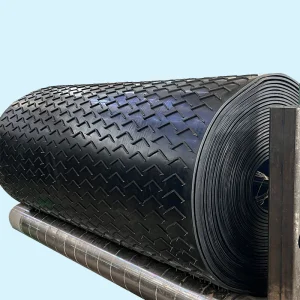
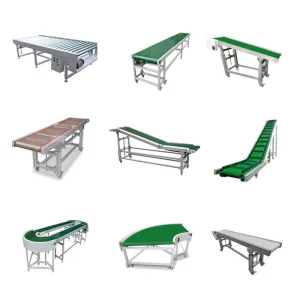
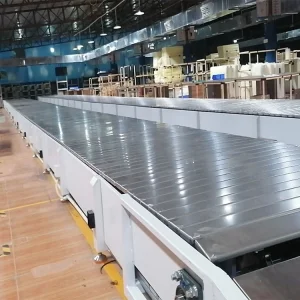
Continuous conveying of hot materials is one of the most mechanically and thermally punishing environments in heavy industry. Rapid thermal degradation of elastomeric polymer matrices leads to severe hardening, cracking, chemical breakdown, and adhesive failure between the reinforcing carcass and outer protective covers. Dongguan Trakkx Tech Co., Ltd. custom designs and manufactures engineered conveying matrices capable of preserving mechanical integrity under high heat stress, satisfying the rigorous industrial needs of Hungary’s thriving manufacturing landscape.
Information Gain Metric: Standard conveying systems degrade exponentially when surface temperatures exceed 80°C. Engineered heat-resistant conveyor belts utilizing premium EPDM (Ethylene Propylene Diene Monomer) matrices are cross-linked to tolerate continuous bulk material temperatures of 180°C and temporary peaks up to 400°C.
Hungary's geographical position at the heart of Europe has fostered deep integration with the continent's heavy industrial networks. Specifically, regions such as Győr-Moson-Sopron, Central Hungary, Borsod-Abaúj-Zemplén, and Fejér counties host massive automotive, metallurgical, chemical, and food processing complexes. These industries rely heavily on conveyor systems that cannot afford thermal downtime.
In metallurgy, plants such as those in Dunaújváros deal with hot sintered ore, pellets, coke, and slag handling. Conveying sinter at temperatures between 200°C and 400°C requires dynamic multi-ply belts that won't crack or delaminate. In the automotive sector (hubs in Győr and Kecskemét), conveyor systems must handle heat treatment processes, metal stamping scrap, and high-temperature painting lines where anti-static properties and thermal stability are essential.
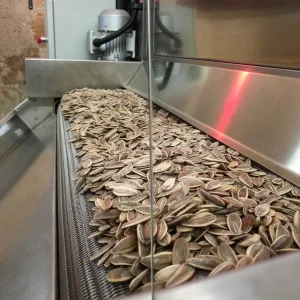
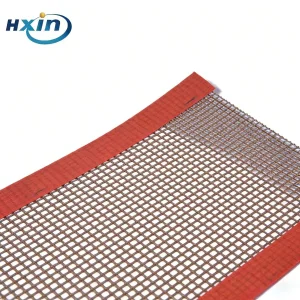
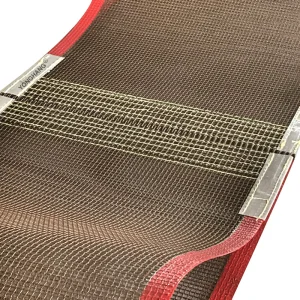
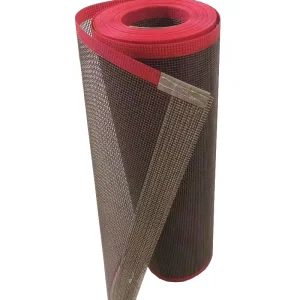
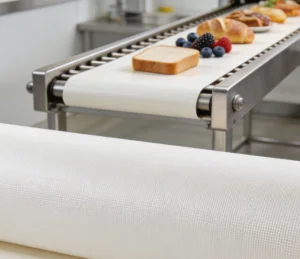
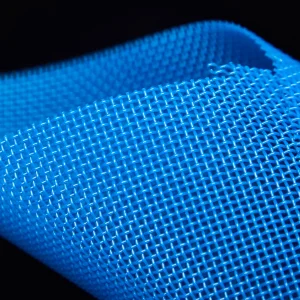
Furthermore, Hungary's highly competitive food processing factories require FDA-grade and EU-regulation-compliant, heat-resistant conveyor systems. Whether handling baking tunnels, dehydrating lines, or sterilizing zones, our food-grade high-temperature belts, such as our PU and PTFE coated E-glass fiberglass open mesh belts, provide absolute reliability and biological cleanliness.
Globally, the heat-resistant conveyor belt market is moving away from basic Styrene-Butadiene Rubber (SBR) compounds toward advanced synthetic elastomers like EPDM, Fluoroelastomers (FKM), and high-strength metal-mesh alloys. Rising energy and raw material costs drive factories to minimize process downtime. A conveyor belt failure in a cement plant clinker line can halt kiln operations, resulting in catastrophic loss of production yield.
To combat this, manufacturers are leveraging nano-clay fillers, vulcanization accelerators, and smart structural monitoring. The integration of high-performance carcass materials like aramid fibers and steel cord structures ensures that even under high heat, longitudinal elongation is minimized, preventing belt slippage, misalignment, and structural failure.
Understanding which heat-resistant compound matches your operating parameters is vital. The table below lists the standardized classifications utilized by Trakkx Tech:
| Class | Base Compound | Max Continuous Temp | Max Peak Temp | Primary Application Fields |
|---|---|---|---|---|
| Class T1 | Premium SBR / Nitrile | 120°C | 150°C | Foundry sand, ash, superphosphates, grain drying |
| Class T2 | EPDM / SBR Blend | 150°C | 180°C | Cement plants, hot fertilizer, chemical processing |
| Class T3 | Pure EPDM Matrix | 180°C | 220°C | Hot clinker, metallurgical sinter, slag recycling |
| Class T4 (Special) | Advanced EPDM + Aramid | 220°C | 400°C | Smelting facilities, glassworks, extreme sinter ore |
| Metal / PTFE | 310S / PTFE-Coated Glass | 260°C to 1100°C | 1150°C | Ovens, powder coating, high-heat curing, food baking |
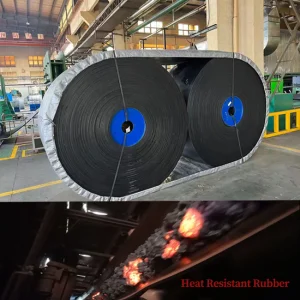
Heavy-duty steel-cord and fire-retardant industrial lines engineered to support continuous transport under extreme thermal loading.
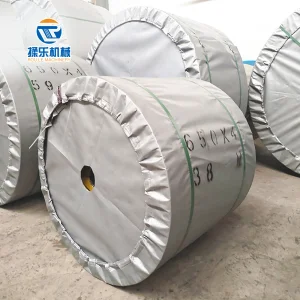
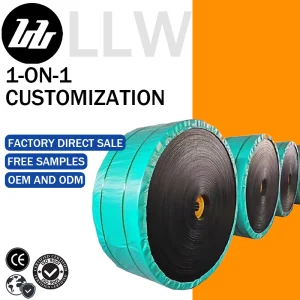
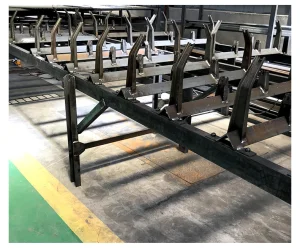
To design an optimal material handling solution, engineers must look at localized industrial parameters. Environmental humidity, chemical exposure, abrasive materials, and continuous heat profiles must be factored into the conveyor belt design.
Handling sintered materials, coke, or raw slag requires a conveyor cover compound with exceptional vulcanization characteristics. Standard SBR/Natural rubber belts exposed to hot coke over 150°C quickly harden, lose elasticity, and split under impact stress. In such applications, Trakkx Tech recommends pure EPDM covers with dynamic polyester-nylon (EP) carcasses. The EP multi-ply fabric offers high tensile strength, outstanding structural flexibility, and minimal hot-stretch elongation, making it suitable for heavy-duty metal casting operations in Hungary.
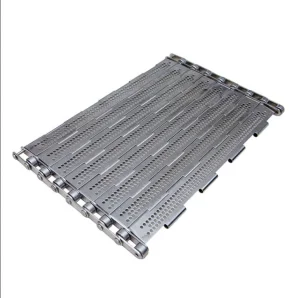
Automotive body parts must pass through massive drying, paint-curing, and welding tunnels. In these zones, belts must operate at temperatures between 200°C and 300°C without generating static electricity or releasing chemical outgassing that could contaminate the paint layer. Our 310S perforated mesh stainless steel belts and anti-static high-temperature rubber conveyor belts are engineered to operate in these critical environments without warp, maintaining zero-tolerance tracking tolerances.
Hungary’s agricultural and processing industries produce significant quantities of processed meats, grains, and baked goods. Baking ovens require food-grade, FDA-compliant, and high-temperature resistant transport options. Using PTFE-coated fiberglass open mesh belts, operators run continuous roasting and drying lines up to 260°C. Our belts are non-toxic, non-stick, chemical-resistant, and easily cleanable to prevent bacterial growth.
Global conveying solutions engineered for maximum longevity, efficiency, and customized industrial operation.
Dongguan Trakkx Tech Co., Ltd. is a leading manufacturer specializing in industrial material handling and conveying systems worldwide. With deep expertise in conveyor engineering, we design and manufacture high-performance conveyor systems that help operations worldwide optimize material workflows, improve production safety, and minimize operational costs.
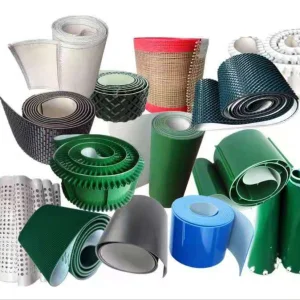
Our product portfolio ranges from heat-resistant EPDM conveyor belts, modular belts, and stainless steel wire mesh networks to food-grade PU belts, sidewall systems, and custom engineering lines. Our solutions are built to satisfy the complex demands of logistics, pharmaceuticals, warehouse distribution, automotive assembly, electronics production, and heavy raw material extraction.
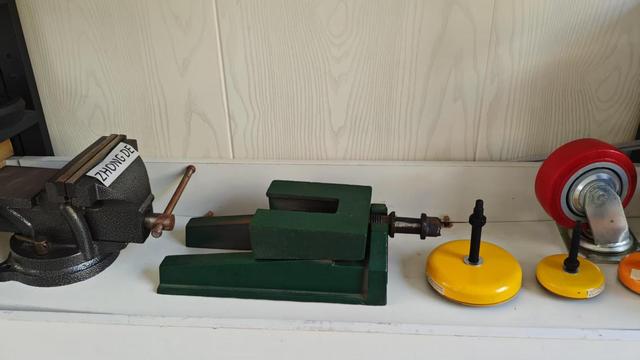
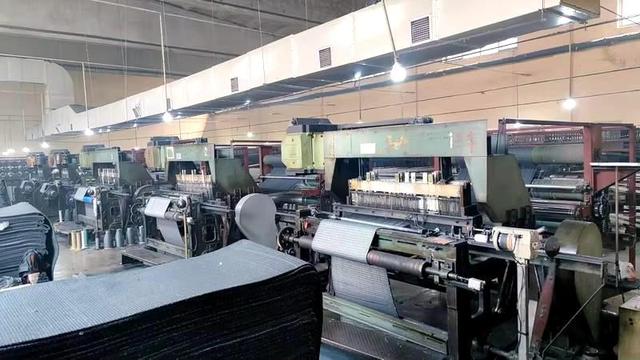
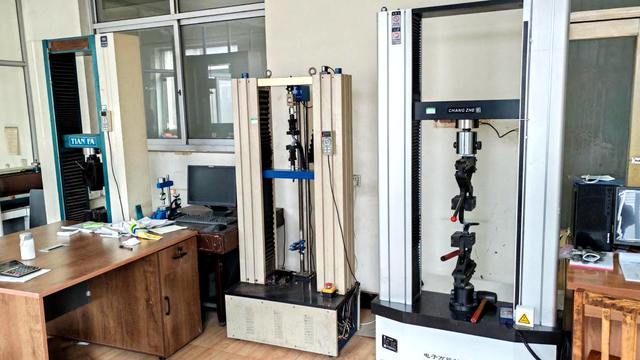
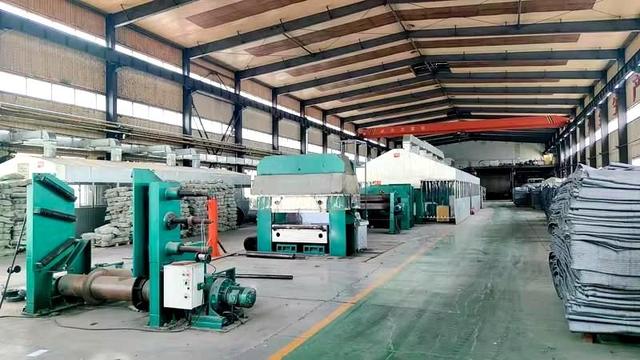
At Trakkx Tech, our facility uses state-of-the-art compounding facilities, automated vulcanizing presses, and comprehensive quality testing equipment. Every production batch undergoes strict adhesion, tensile strength, and heat-aging tests (under ISO 4195 guidelines) to ensure the belt maintains its physical integrity long after installation.
Through our comprehensive OEM and ODM support, we work closely with engineering agencies, equipment designers, and system integrators globally. From initial consultation, mechanical parameter calculations, and custom prototype modeling to manufacturing, delivery, and installation support, Trakkx Tech provides end-to-end reliability for businesses throughout Europe, North America, and beyond.
Precision materials engineered for specific high-temperature processes, FDA-regulated facilities, and drying tunnels.
As heavy industry works toward carbon neutrality and energy efficiency, high-temperature conveyor belts must adapt to minimize thermal loss and environmental impact. The development of heat-resistant compounds has progressed along three main lines:
Integrating fiber-optic sensors and high-performance RFID tags within the conveyor cover matrix allows operators to monitor surface temperature distributions in real time. This helps prevent structural damage from localized hot-spots before the belt carcass is damaged.
Incorporating graphene and carbon nanotubes into the EPDM vulcanization compound increases thermal conductivity. This allows heat to dissipate more quickly across the belt's surface, lowering average operating temperatures and significantly extending the lifespan of the rubber.
Developing low-emission curing technologies reduces the volatile organic compounds (VOCs) released during high-temperature operations, ensuring safer working conditions in enclosed factories.
Expert technical insights regarding high-temperature conveying design, material limits, and wear optimization.
Continuous working temperature refers to the constant heat level a belt can handle without experiencing structural degradation or loss of tensile strength. Peak temperature represents the maximum heat level the belt can withstand for brief periods (typically under 60 seconds) without catastrophic surface melting or ply separation.
EPDM features a fully saturated polymer backbone, making it highly resistant to heat, oxygen, ozone, and UV degradation. In contrast, Styrene-Butadiene Rubber (SBR) contains double carbon bonds in its molecular chain, which break down rapidly under sustained heat above 100°C, causing the rubber cover to dry, harden, and crack.
In Hungary and throughout the European Union, conveyor systems are governed by European standards like DIN 22102 and ISO 4195. These standards classify belts based on testing methods for heat aging and classify them into categories like T120, T150, and T200.
The joint splice is typically the weakest area of any conveyor belt. For high-temperature applications, hot vulcanized splicing using specialized heat-resistant tie-gum and cover compound strips is recommended. Mechanical fasteners should be avoided in high-heat systems as they absorb thermal energy and transfer it directly to the inner textile carcass, accelerating heat damage.
Cooling tunnels use ambient air or forced ventilation to reduce the temperature of the material and the belt surface. This helps prevent heat accumulation, which extends the operational life of the rubber compounds and reduces thermal stress on structural rollers and bearings.
Get in touch with Dongguan Trakkx Tech Co., Ltd. today. Our engineering team will assist you with custom specifications, temperature tolerance calculations, and pricing details for your operations.
Send Inquiry Now Trakkx Tech