Complete type description of rubber conveyor belt:
-
1.
Width and length
-
2.
Top rubber cover thickness
-
3.
Bottom rubber cover thickness
-
4.
EP fabric type
-
5.
Numbers of fabric
-
6.
Top rubber cover and bottom rubber cover quality grade
-
7.
Moulded edge or Cutting edge
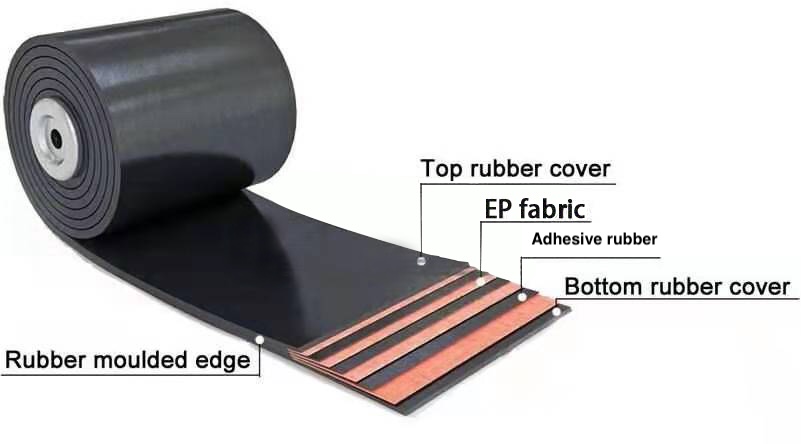
EP630/4 Width 600mm x 4plies top + bottom rubber cover thickness 4+2mm, Length 200m, grade T3, Mould edge.
EP fabric type: EP630/4
Q1: What does EP fabric type EP630/4 mean?
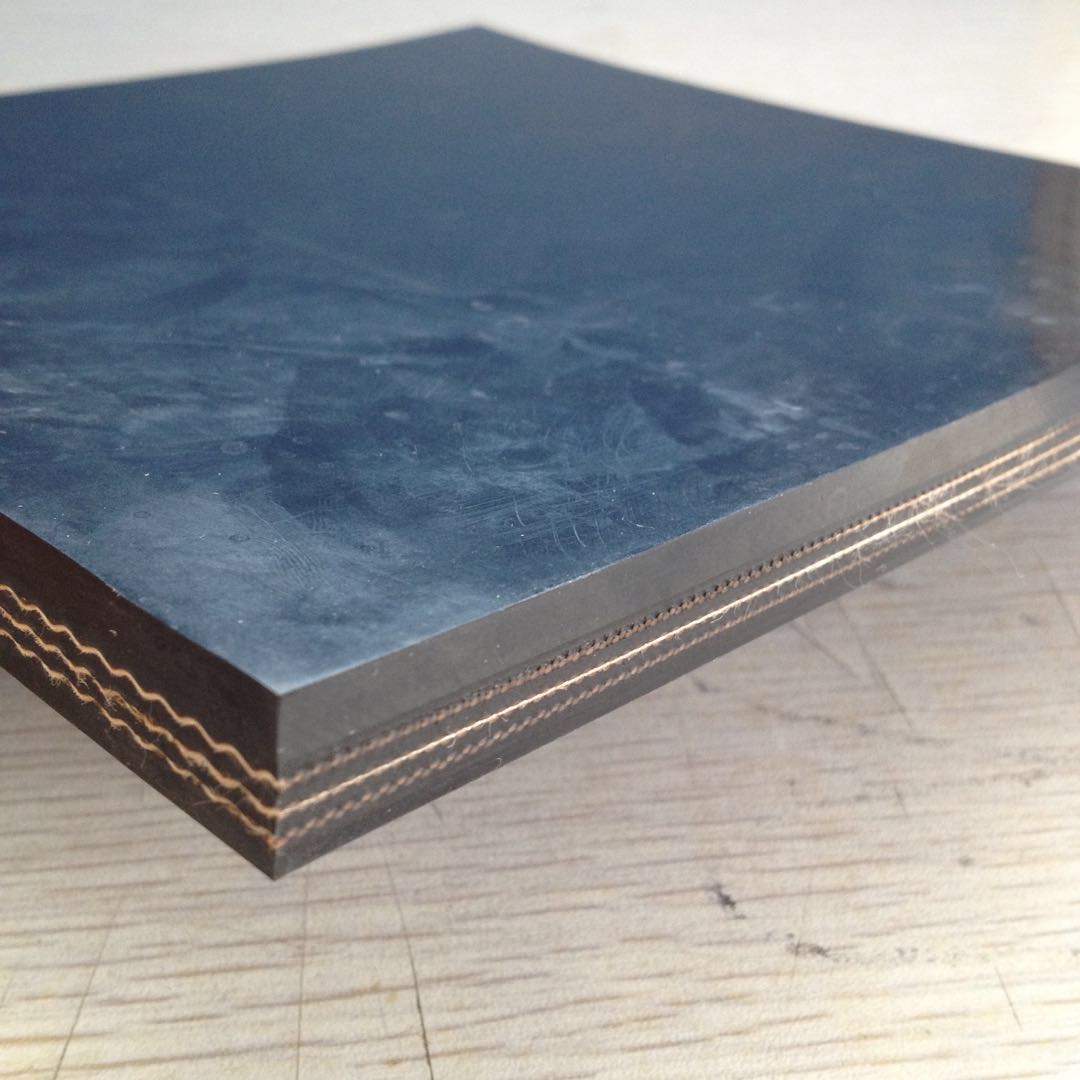
A: EP stands for Polyester (warp) and Polyamide/Nylon (weft) fabric. The number 630 indicates the full thickness tensile strength of 630 N/mm, and "/4" means the belt contains 4 plies of fabric reinforcement.
Q2: How are the top and bottom rubber cover thicknesses measured?
A: They are measured in millimeters. In the specification "4+2mm", the first number (4mm) represents the thickness of the top rubber cover (carrying side), and the second number (2mm) represents the bottom rubber cover (pulley side).
Q3: What is the difference between Moulded edge and Cutting edge?
A: Moulded edge belts have their sides sealed during vulcanization to prevent moisture penetration and fabric exposure. Cutting edge belts are cut from a wider sheet, leaving the fabric edges exposed, which is suitable for standard, less abrasive applications.
Q4: Why is the rubber cover quality grade important?
A: The cover quality grade (e.g., T3, DIN-X, Y, W) defines the rubber's capability to resist wear, abrasion, heat, oil, or flame. Selecting the appropriate grade ensures optimal service life under specific operating environments.
Q5: How do I choose the correct width and length for my conveyor system?
A: The conveyor belt width and length must precisely match the structural dimensions of your conveyor machinery. Standard widths vary, and lengths are customized to meet the specific point-to-point distance of your system.
 Trakkx Tech