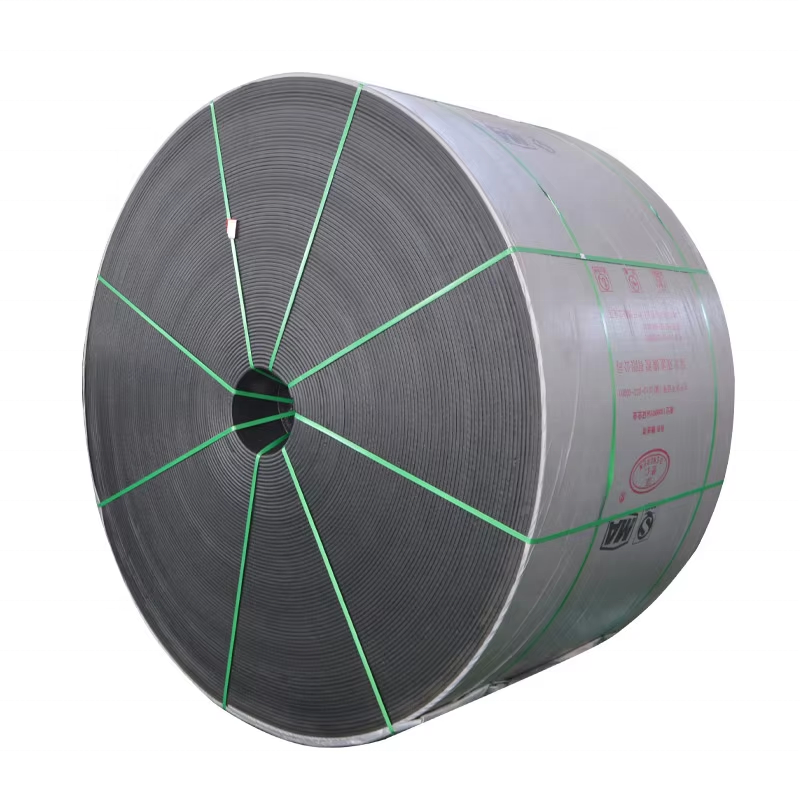
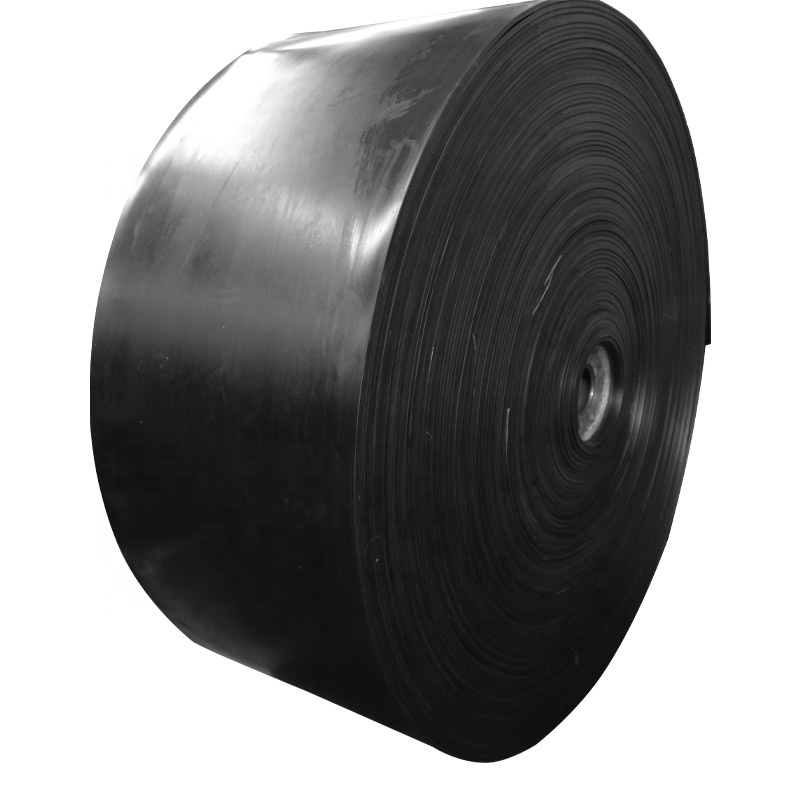
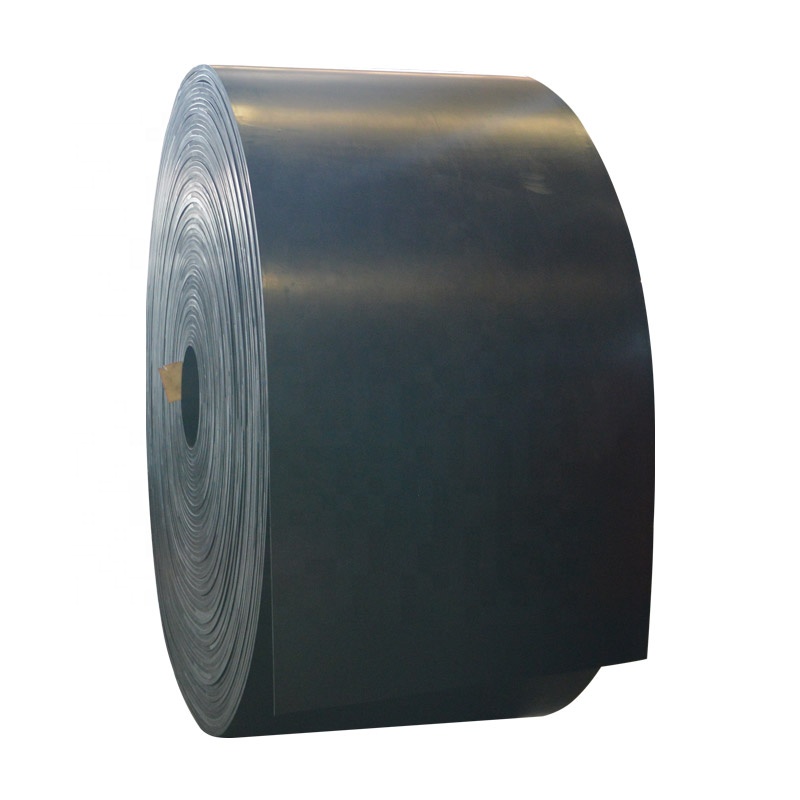
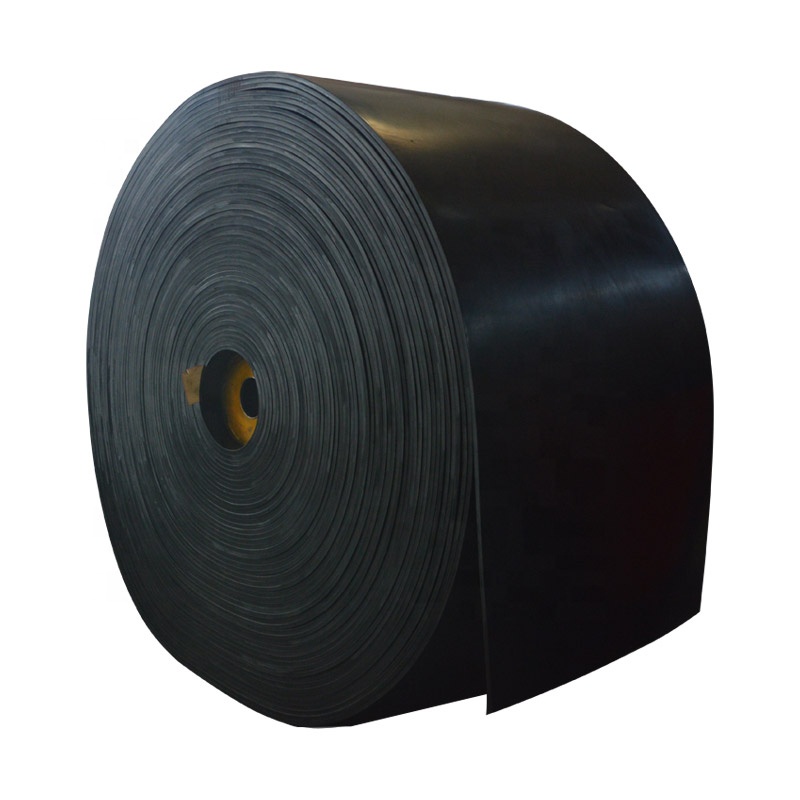
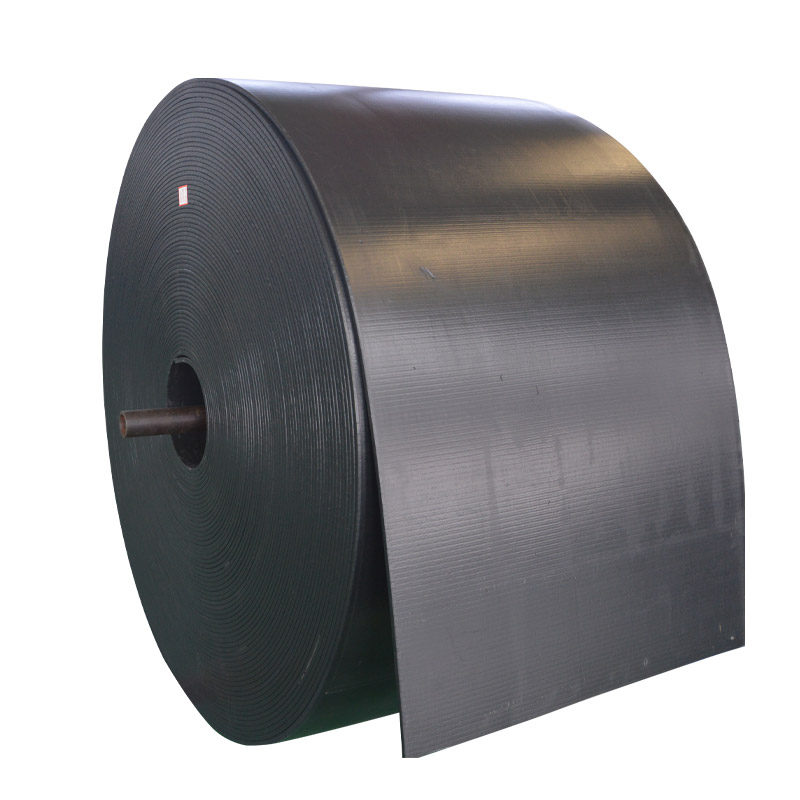
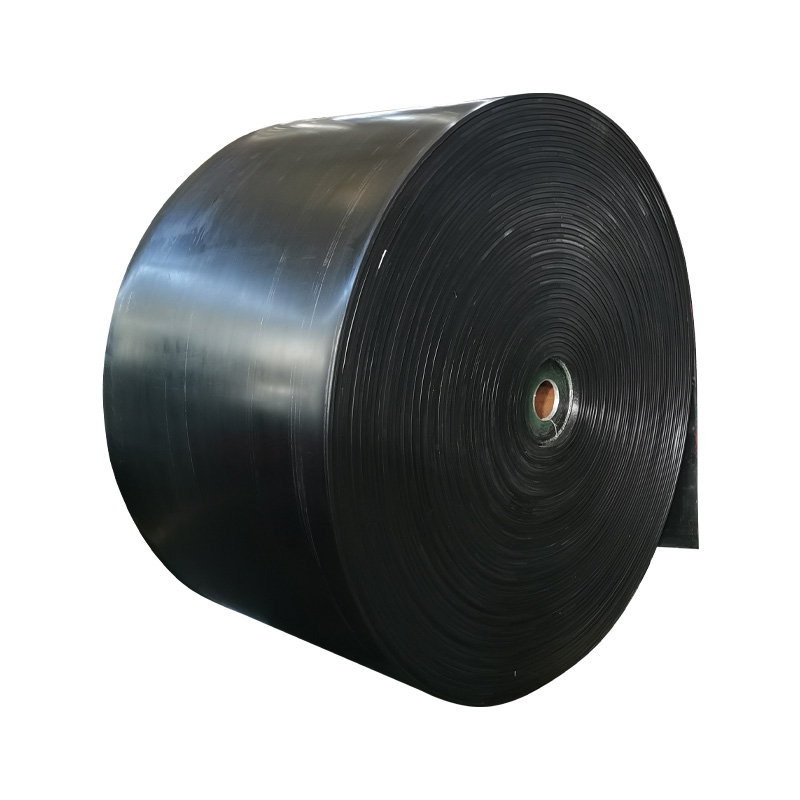
Products Description
| Specification Detail |
Dimension Values |
| Cover thickness (mm) |
Covering glue (upper) |
1.5 - 12 |
| Undercover glue (lower) |
0 - 4.5 |
| Width range (mm) |
400 - 2500 |
500 - 2500 |
800 - 2500 |
1000 - 2500 |
| Belt length (mm) |
≤300 |
| Fabric Type |
Fabric Specification |
Tape Thickness (mm/p) |
2Ply |
3Ply |
4Ply |
5Ply |
6Ply |
| EP (Polyester) |
EP-80 |
0.60 |
160 |
240 |
320 |
400 |
480 |
| EP-100 |
0.75 |
200 |
300 |
400 |
500 |
600 |
| EP-150 |
1.00 |
300 |
450 |
600 |
750 |
900 |
| EP-200 |
1.10 |
400 |
600 |
800 |
1000 |
1200 |
| EP-250 |
1.25 |
500 |
750 |
1000 |
1250 |
1500 |
| EP-300 |
1.35 |
600 |
900 |
1200 |
1500 |
1800 |
| EP-350 |
1.45 |
- |
1050 |
1400 |
1750 |
2100 |
| EP-400 |
1.55 |
- |
- |
1600 |
2000 |
2400 |
| EP-450 |
1.77 |
- |
- |
2000 |
2500 |
3000 |
Cover Technical
| RMA Norm |
Characterization |
Tensile Strength in Mpa (min) |
Elongation at break % (min) |
Abrasion in mm³ (max) |
Hardness in SHA |
Basic Material |
| M24 |
Extreme abrasion resistance, superior resistance to cutting & tearing |
24 |
450 |
≤120 |
60±5 |
NR/SBR |
| RMA I |
High abrasion resistance, superior resistance to cutting & tearing |
17 |
450 |
≤200 |
60±5 |
NR/SBR |
| RMA II |
Resistant to cuts and gouges, flexible at lower temperatures |
14 |
400 |
≤250 |
60±5 |
NR/SBR |
| MHSA |
Flame Retardant |
15 |
350 |
≤200 |
60±5 |
CR |
EP Conveyor Belt Cover Grade
| DIN22102ref |
Characterization |
Tensile in Mpa |
Elongation in % |
Abrasion in mm³ |
Hardness in SHA |
| Y |
High Abrasion Resistance |
≥20 |
≥400 |
≤150 |
60±5 |
| X |
Resistance to cutting |
≥25 |
≥450 |
≤120 |
60±5 |
| W |
Extra Abrasion Resistance |
≥18 |
≥450 |
≤90 |
60±5 |
| Z |
Abrasion Resistance |
≥15 |
≥350 |
≤200 |
60±5 |
| K,Y |
Flame retardant |
≥20 |
≥400 |
≤150 |
60±5 |
| S,Y |
Flame retardant |
≥20 |
≥400 |
≤150 |
60±5 |
| K |
Flame retardant |
≥15 |
≥350 |
≤200 |
60±5 |
| S |
Flame retardant |
≥15 |
≥350 |
≤200 |
60±5 |
Technical Datasheet of Steel Cord Conveyor Belt
| Type |
Rated Break Strength (N/mm) |
Splice Length (mm) |
No. of Step |
Diameter of Drive Pulley (>mm) |
Reference Elongation (%) |
Minimum Cover Gauge (mm) |
| ST500 |
500 |
500 |
1 |
500 |
0.1 - 0.3 |
3 |
| ST630 |
630 |
550 |
1 |
500 |
0.1 - 0.3 |
3 |
| ST800 |
800 |
600 |
1 |
630 |
0.1 - 0.3 |
3 |
| ST1000 |
1000 |
600 |
1 |
630 |
0.1 - 0.3 |
3 |
| ST1120 |
1120 |
650 |
1 |
630 |
0.1 - 0.3 |
3 |
| ST1250 |
1250 |
650 |
1 |
630 |
0.1 - 0.3 |
3 |
| ST1400 |
1400 |
1000 |
2 |
630 |
0.1 - 0.3 |
3 |
| ST1600 |
1600 |
750 |
2 |
800 |
0.1 - 0.3 |
4 |
| ST1800 |
1800 |
1150 |
2 |
800 |
0.1 - 0.3 |
4 |
| ST2000 |
2000 |
1150 |
2 |
800 |
0.1 - 0.3 |
4 |
Rubber Conveyor Belt Production Process
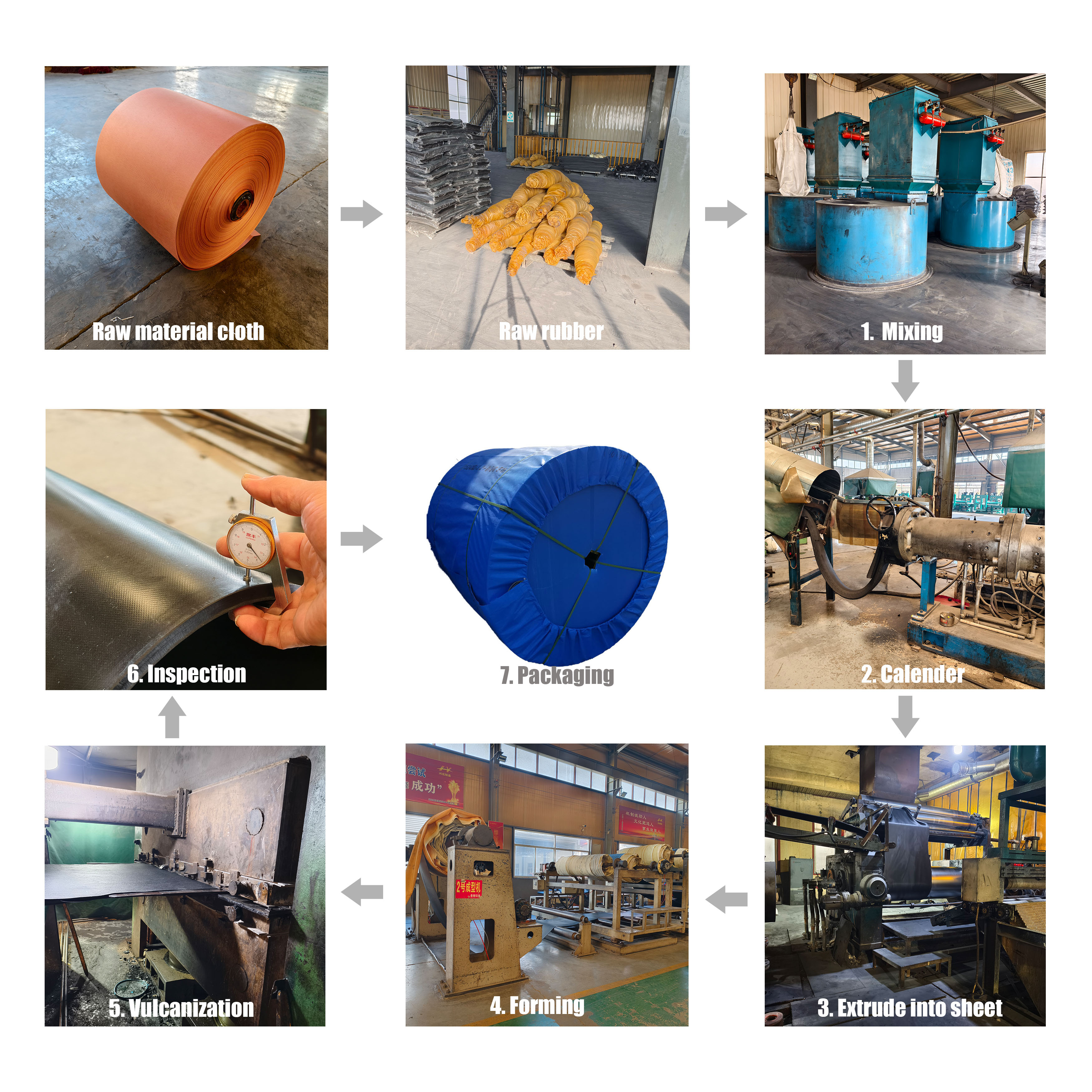
- Raw Material: Textile and natural rubber.
- Mixed Rubber: In the rubber industry, the process of mixing rubber with other additives.
- Calender: Calendering is one of the important basic processes in the processing of polymer materials.
- Extrude into Sheet: The rubber mixture is extruded into sheets.
- Forming Process: Rubber-moulding process.
- Vulcanization: Also known as crosslinking, maturation. Adding vulcanizing agent and accelerator in rubber crosslinking additives, under certain temperature and pressure conditions, the linear macromolecule into a three-dimensional network structure process. Since sulfur was first used to achieve the cross-linking of natural rubber, it is called vulcanization.
- Checkout: Inspection of the finished product.
- Packaging: Packing the conveyor belt in rolls.
QC of Rubber Conveyor Belt
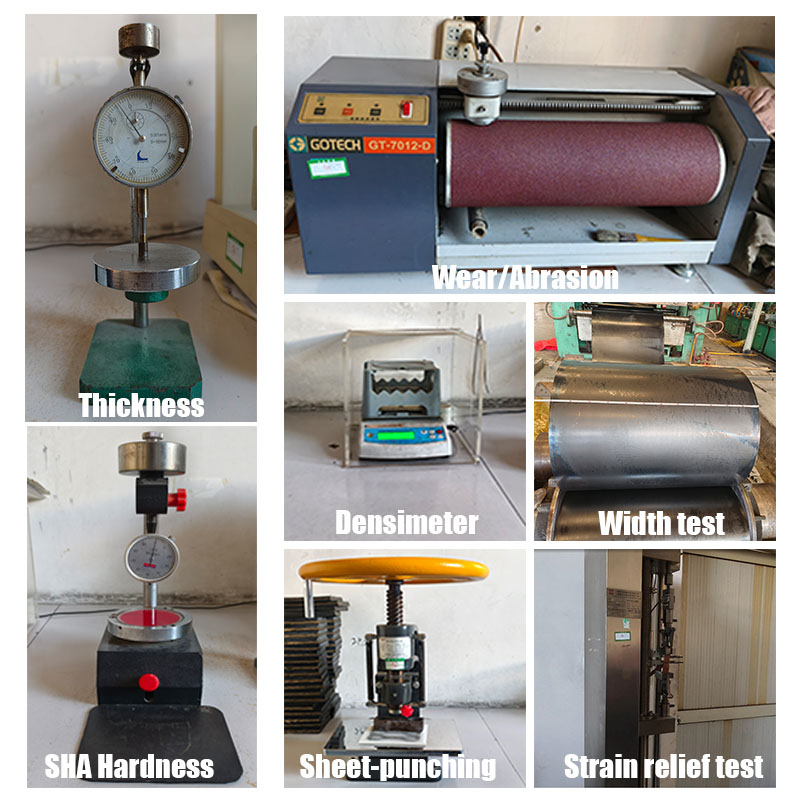
- Thickness gauge: An instrument used to measure the thickness of an object, usually used to measure materials such as metal, plastic, and paper.
- Wear: A method of testing the wear resistance of the surface of a material, usually using a wear machine or wear instrument.
- Densimeter: An instrument for measuring the density of a substance, usually used in scientific experiments and industrial processes.
- Width test: Measurement and inspection of product width.
- SHA Hardness: A standard instrument used to measure the hardness of materials, especially for elastic materials such as rubber and plastics. It is commonly used to evaluate the softness and wear resistance of materials.
- Sheet-punching: A machine for punching and cutting metal or plastic sheets.
- Strain relief test: Tensile testing is a test method used to evaluate the performance and reliability of a material or product under stress. It measures the tensile strength, breaking strength and deformation capacity of a material or product by applying a pulling force.
Types of Packaging
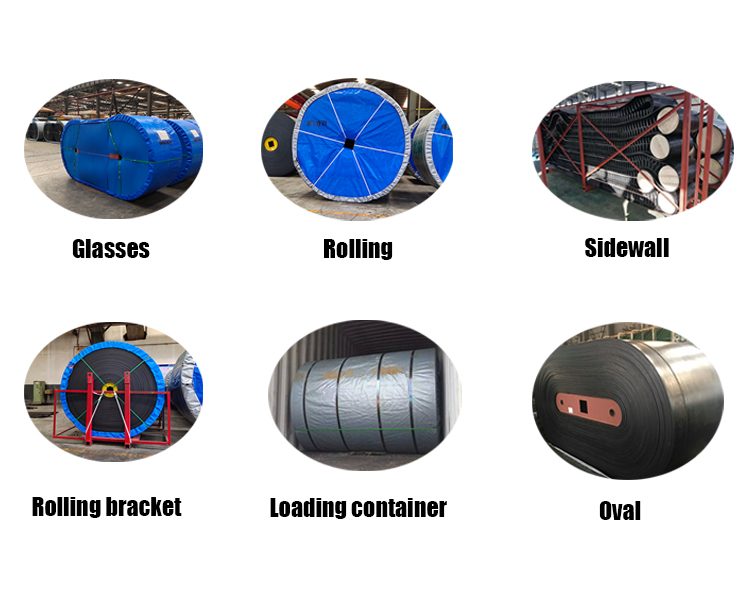
*Glasses
*Rolling
*Sidewall
*Rolling bracket
*Loading container
*Oval
Company Profile
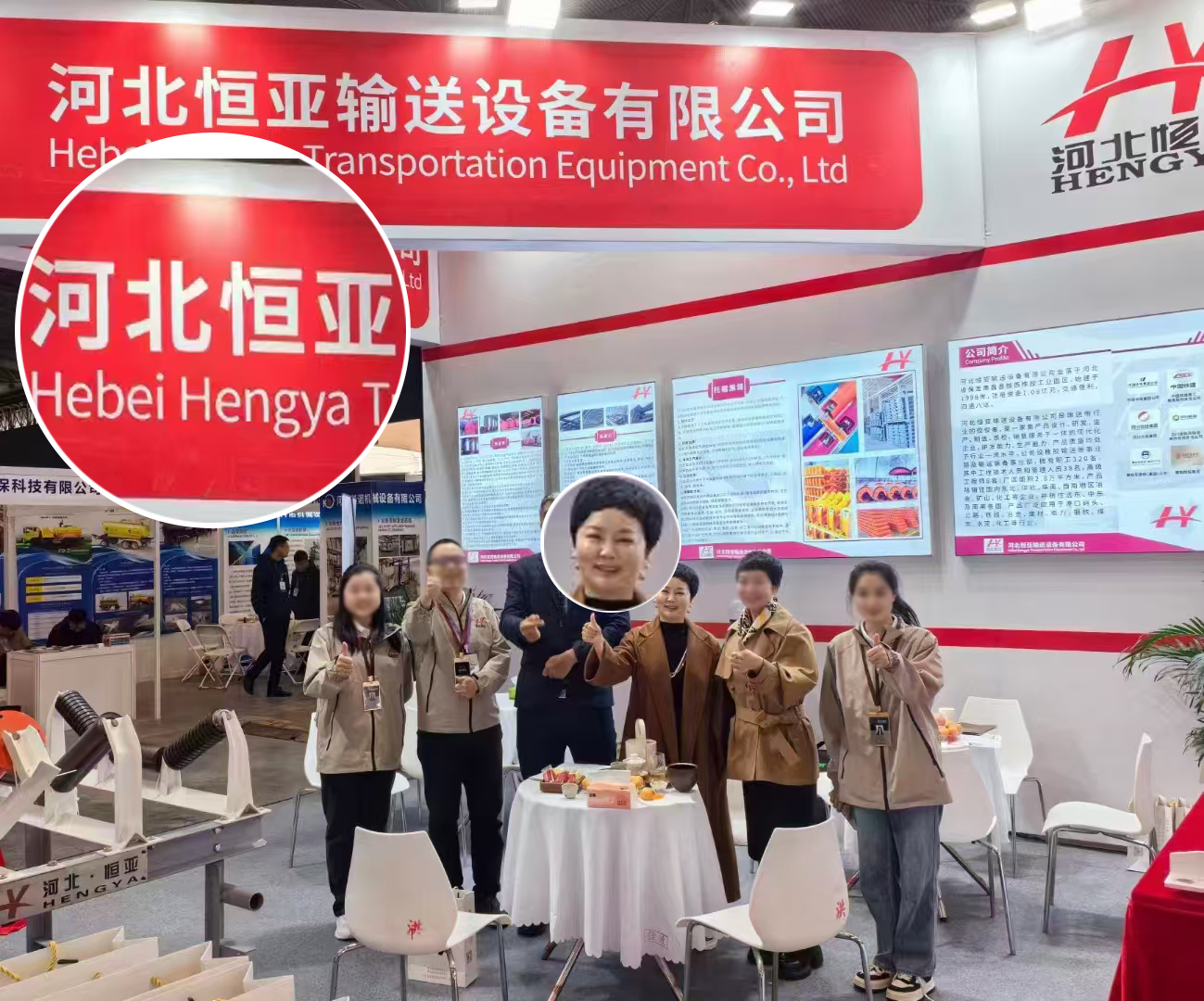
Industry first-class level. The company has a rubber conveyor belt division and a conveyor equipment division. It has 320 employees, metallurgy, mining, chemical and other enterprises sold to the Far East, the Middle East and South American countries.
Products are widely used in ports, highways, railways, metallurgy, building materials, electric power, steel plant, coal, cement plant, chemical and other industries.
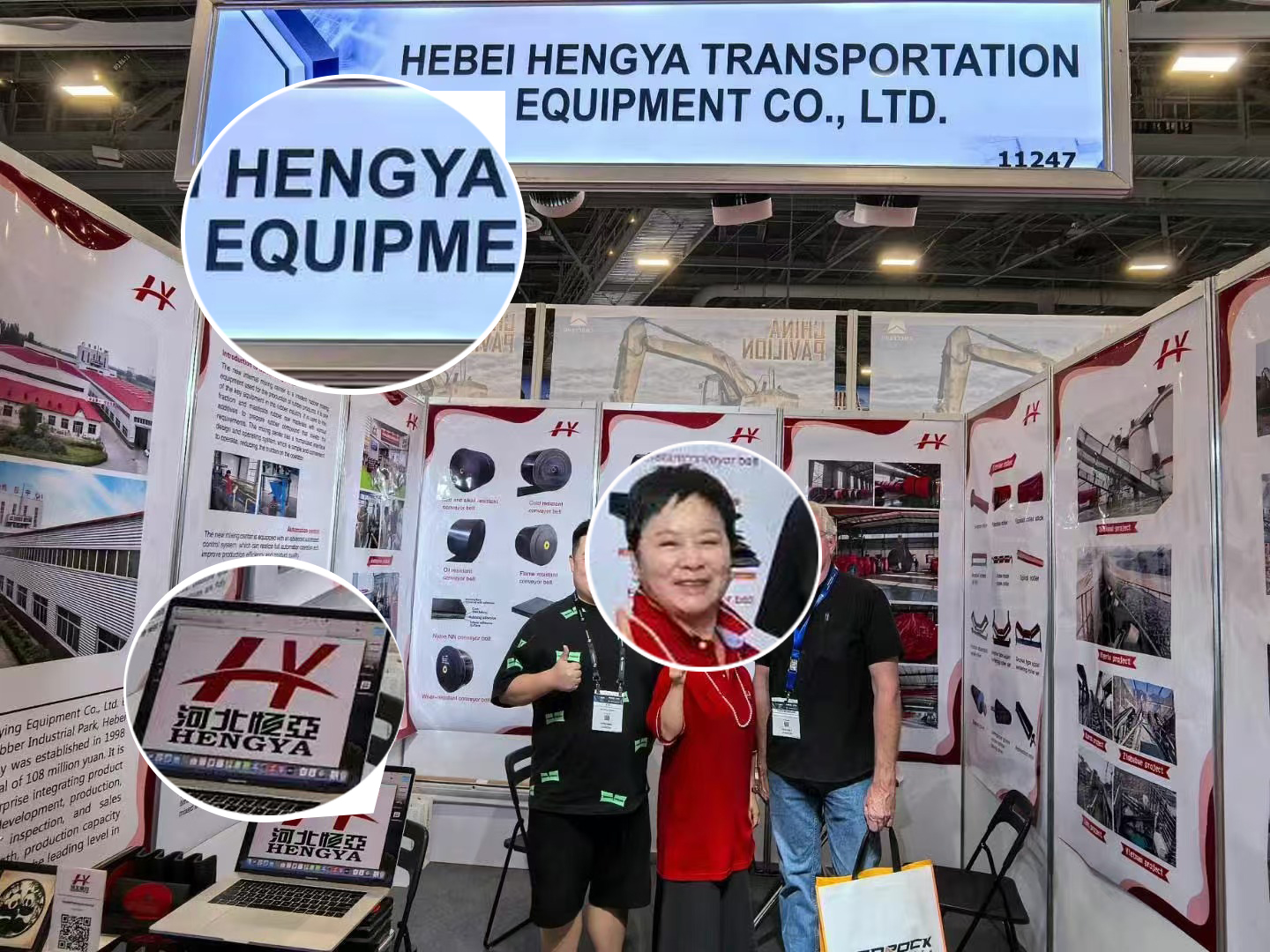
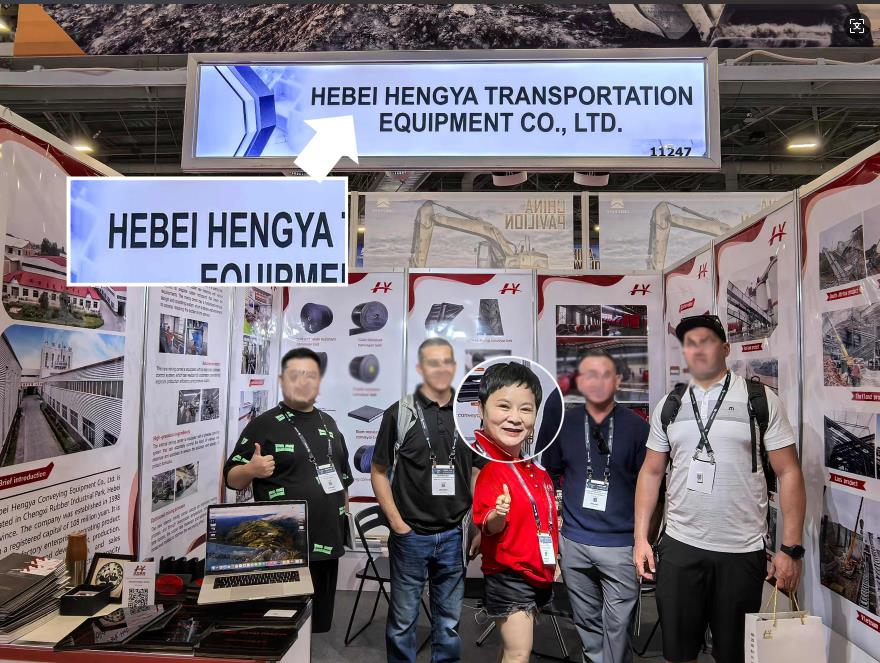
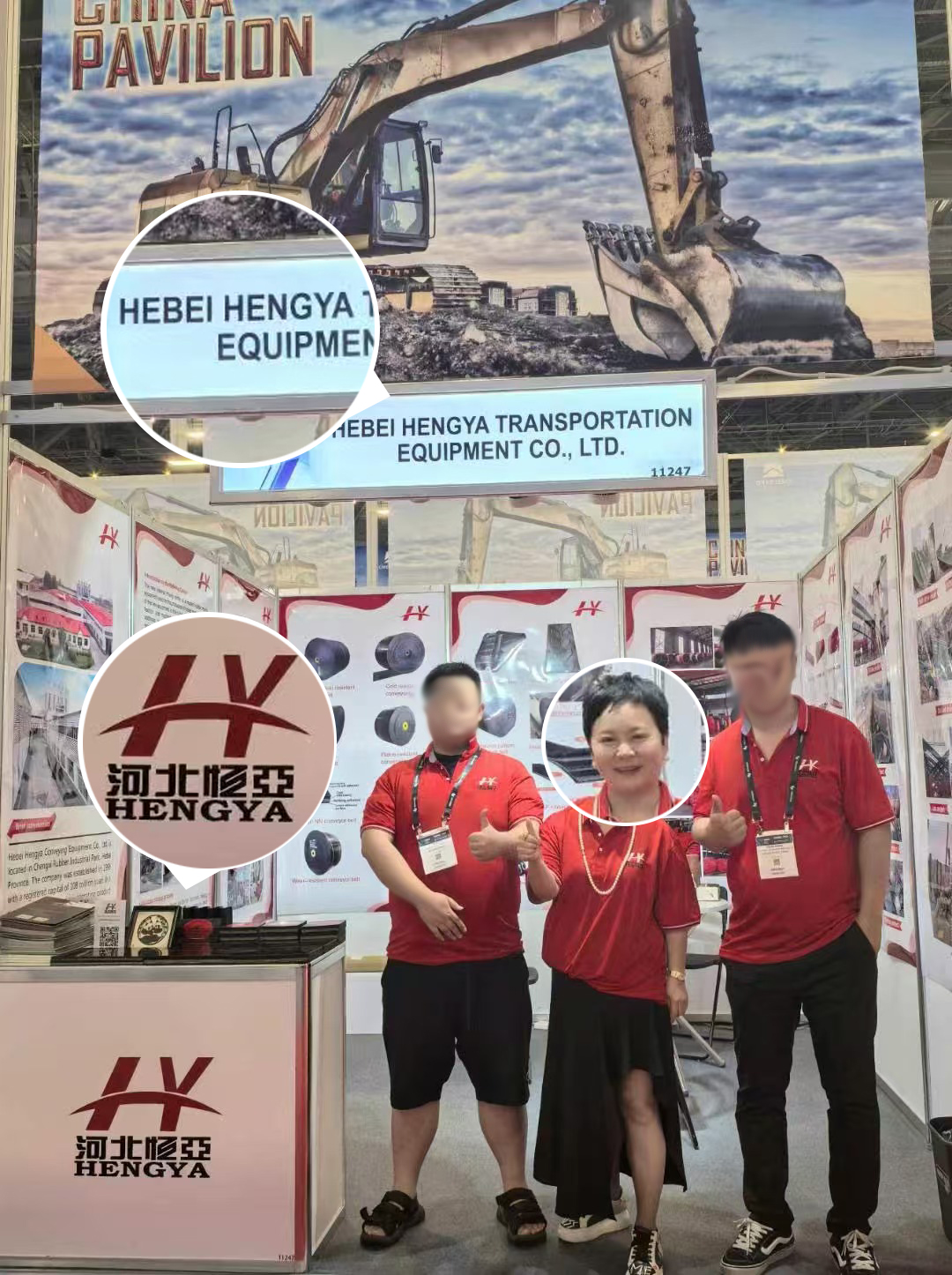
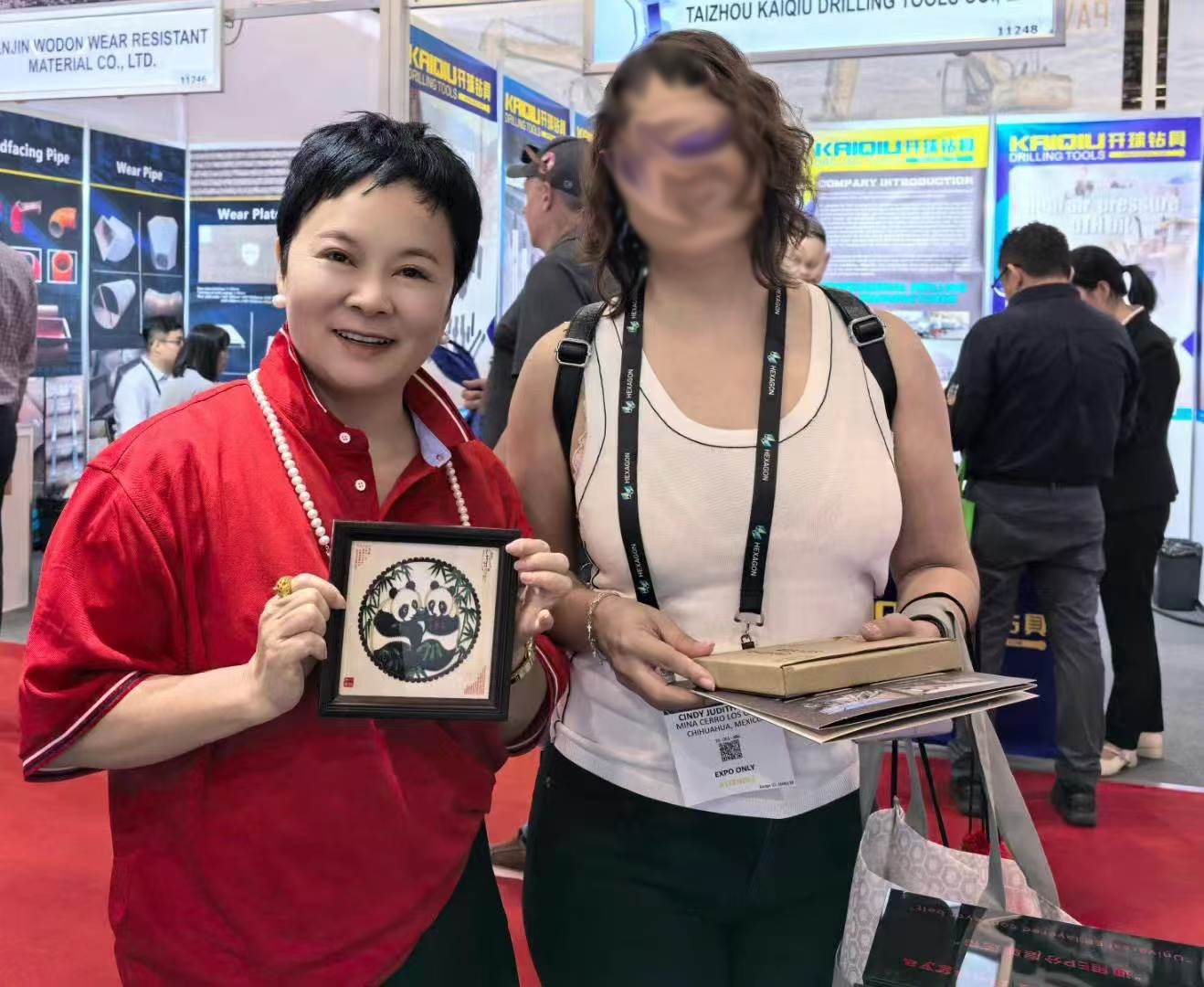
Exhibition
FAQ
What's your advantage?
We carry out honest business with competitive prices and professional service during the export process.
How can we guarantee quality?
We always arrange a pre-production sample before mass production and conduct a final inspection before shipment.
How can I believe you?
We consider honesty to be the life of our company. Your order and money will be well guaranteed under standard trade assurance terms.
Do you have a stable raw materials supply?
A long-term cooperation relationship is kept with eligible suppliers of raw materials, which ensures the high quality of our products from the very first step.
How is your quality control?
Our quality control steps include:
(1) Confirming everything with our client before moving to sourcing and production;
(2) Checking all the materials to ensure they are correct;
(3) Employing experienced workers and giving them proper training;
(4) Inspecting throughout the whole production process;
(5) Final inspection before loading.
 Trakkx Tech