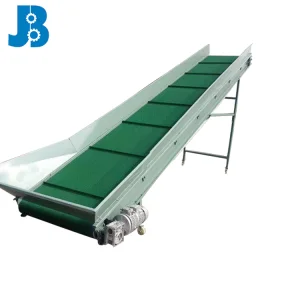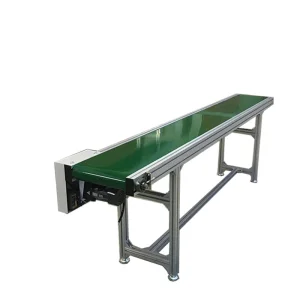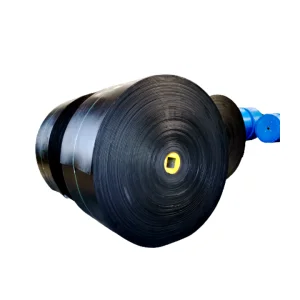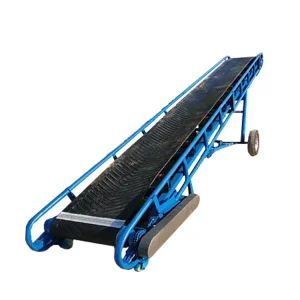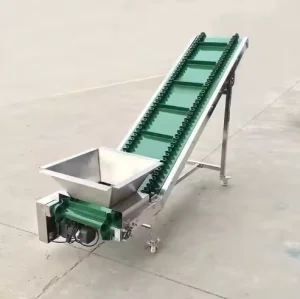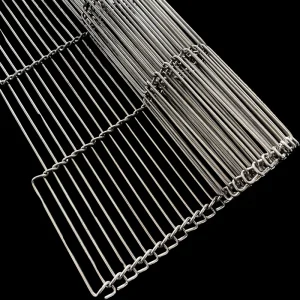
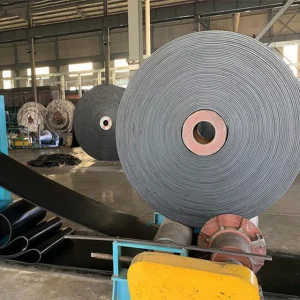
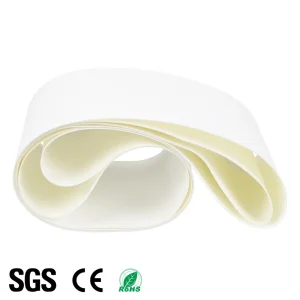
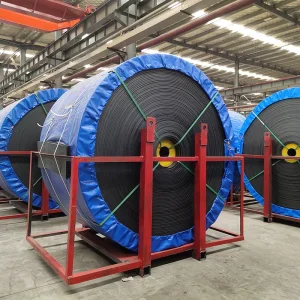
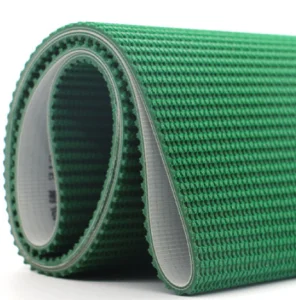
Dongguan Trakkx Tech Co., Ltd. stands as a premier China conveyor belt manufacturer specializing in industrial material handling and conveying solutions for a wide range of industries worldwide. With years of experience in conveyor technology, we provide reliable, efficient, and customized conveyor systems that help businesses optimize production processes, improve workflow efficiency, and reduce operational costs.
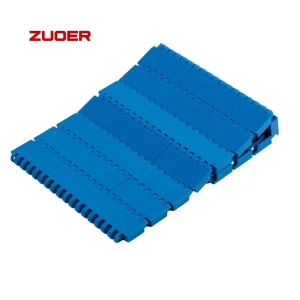
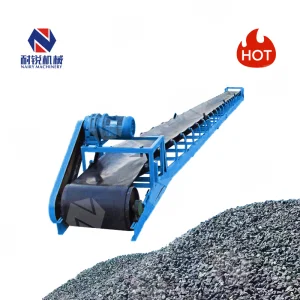
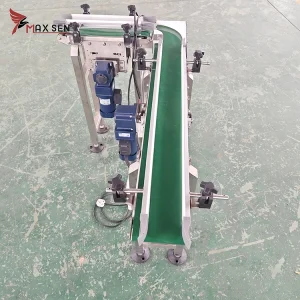
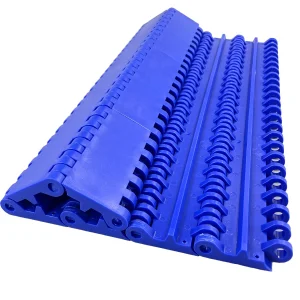
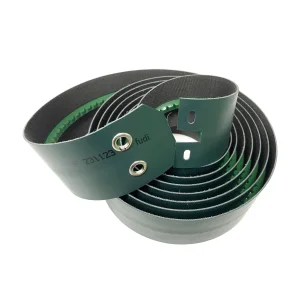
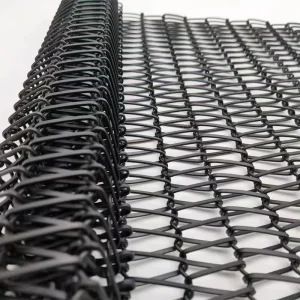
Our product portfolio includes conveyor belts, belt conveyor systems, modular conveyors, roller conveyors, inclined conveyors, assembly line conveyors, packaging conveyors, and customized material handling equipment. Designed to meet the demanding requirements of modern manufacturing environments, our solutions are widely used in logistics, food processing, electronics, automotive, warehousing, packaging, pharmaceuticals, and industrial production facilities.
At Trakkx Tech, we combine engineering expertise with advanced manufacturing capabilities to deliver high-performance conveying systems tailored to specific customer applications. Our experienced technical team works closely with clients throughout the entire process, from project consultation and system design to prototyping, production, installation support, and after-sales service.
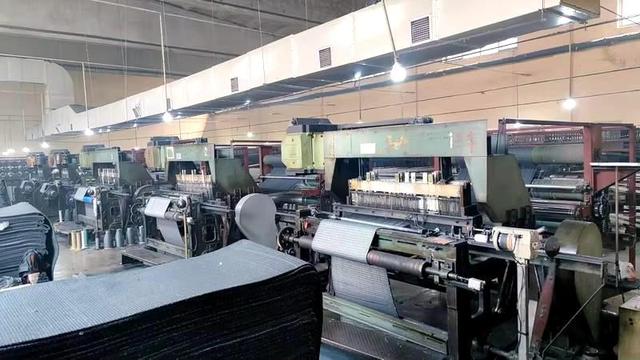
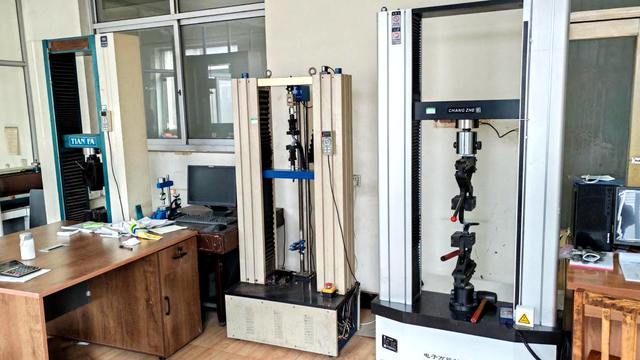
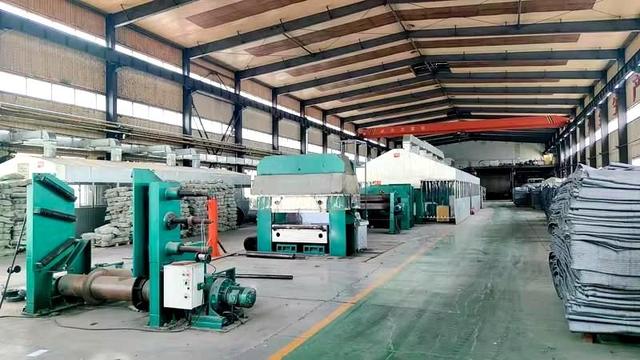
Our manufacturing facility is equipped with modern production equipment and strict quality control systems to ensure durability, reliability, and consistent performance. Every conveyor solution undergoes comprehensive testing and inspection before delivery, helping customers achieve smooth and uninterrupted material handling operations.
In addition to standard products, Dongguan Trakkx Tech Co., Ltd. offers flexible OEM and ODM services for global distributors, system integrators, equipment manufacturers, and industrial brands. We are committed to providing innovative conveying solutions that adapt to evolving industry needs and support long-term business growth. Serving customers across North America, Europe, Southeast Asia, the Middle East, and other international markets, Trakkx Tech has established a reputation for quality, efficiency, and customer-focused service.
In bulk handling and high-speed logistics, the efficiency and lifespan of a conveyor system are directly determined by the dynamic stability of its tensioning configuration. Belt tensioning is not merely a mechanism to keep a belt from slipping; it is a critical variable that governs structural load distribution, motor efficiency, splice fatigue, and overall system safety. As global manufacturers shift toward automated high-capacity throughput, manual belt adjustment techniques have become obsolete. Modern engineering demands intelligent, self-monitoring, and dynamic take-up systems that respond in real-time to load variations.
“Information Gain Perspective: The core engineering bottleneck in conveyor reliability isn't the belt compound itself—it is the management of elastic elongation during start-up acceleration. Proper OEM/ODM dynamic tensioning reduces structural wear by up to 40%.”
Conveyor belts are visco-elastic structures. When a drive pulley transmits torque to a belt, it induces different levels of tension along the loop, traditionally classified as Tight Side Tension (T1) and Slack Side Tension (T2). To prevent drive pulley slippage, the tension ratio (T1/T2) must comply with Euler's equation of friction:
T1 / T2 ≤ e^(f · θ)
Where f is the coefficient of friction between the pulley lag and the belt back, and θ is the angle of wrap. An engineered belt tensioning system's role is to maintain T2 above the critical value necessary to prevent drive slippage and control belt sag between idlers. If the tension is too low, excessive belt sag occurs, leading to material spillage and increased power consumption. Conversely, over-tensioning shortens the service life of splices, increases bearing wear, and risks structural failure.
No two conveying applications are identical. Dongguan Trakkx Tech Co., Ltd. designs and manufactures three primary classifications of dynamic belt tensioning systems, customized via our OEM/ODM division to meet specific project geometries:
Utilizing pre-calculated counterweights inside a vertical tower framework, GTUs provide constant tension regardless of belt stretch. Recommended for high-capacity, long-distance conveyors where thermal expansion and startup elasticity require massive take-up travel.
Designed for heavy-duty mining and quarrying applications. Using closed-loop PLC feedback, these systems dynamically increase tension during high-torque startup phases and relax tension during continuous operation to reduce components stress.
Ideal for sanitary food-grade, modular, and packaging conveyors (FDA/USDA compliant). These lightweight, responsive designs automatically absorb shock loads and allow quick release for washing procedures.
Sourcing belt tensioners and complete conveying lines from China is no longer just a cost-saving measure; it is a strategic decision for supply chain integration. The Pearl River Delta, where Dongguan Trakkx Tech Co., Ltd. is located, offers an unparalleled cluster of engineering talent, raw material accessibility, and advanced metallurgical processing technologies.
Our proximity to world-class steel manufacturers, precision bearing suppliers, and high-performance polymer extrusion centers allows us to reduce manufacturing lead times by up to 35% compared to European or North American competitors. In addition, our robust logistics network enables direct shipping channels through Shenzhen and Guangzhou ports, ensuring rapid transit, simplified customs clearance, and predictable delivery windows.
By operating our own state-of-the-art manufacturing facility rather than relying on external sourcing agents, Trakkx Tech maintains end-to-end quality control. We implement strict material verification protocols, starting with spectral analysis of incoming steel alloys to ensure structural integrity, and ending with dynamic load tests under simulate operational conditions before shipping.
Operating in international markets requires rigorous adherence to local occupational safety and sanitary regulations. When exporting belt tensioning systems and heavy machinery to regions such as the European Union or North America, compliance is a prerequisite. Trakkx Tech addresses these strict requirements during the initial engineering design phase:
Procurement managers and lead design engineers face distinct challenges when sourcing heavy-duty belt tensioning systems internationally. Trakkx Tech addresses these critical requirements directly:
Challenge: Guaranteeing component reliability and preventing alignment drift.
Solution: Trakkx Tech utilizes finite element analysis (FEA) to verify stress points in high-tension frames. We supply native CAD files (.STEP, .DWG) during the quotation phase, allowing seamless integration of our designs into your system blueprints.
Challenge: Total Cost of Ownership (TCO) and long lead times.
Solution: We offer volume pricing, custom branding (OEM packaging), and structured service-level agreements (SLAs). Our regional distribution partners ensure localized technical support and immediate spare parts availability.
Operating in abrasive environments containing quartz, granite, or mineral ore requires heavy-duty take-up units with dust-sealed, greaseable spherical roller bearings. Trakkx Tech systems prevent belt slippage during sudden surge-loading cycles.
Distribution centers require low-noise, rapid-tension adjustments to maintain parcel tracking and sorting precision. Our pneumatic spring-assisted tensioners react instantly to direction changes and acceleration shifts.
For meat processing, baking ovens, and pharmaceutical lines. These environments require wash-down-safe designs. Quick-tension release mechanisms allow quick belt detensioning for sanitization without resetting alignment.
The future of bulk handling lies in predictive maintenance rather than reactive troubleshooting. Traditional systems rely on visual inspections to detect belt sagging or slippage, by which time structural damage has often already occurred. Modern developments are introducing "smart" tensioning systems equipped with industrial IoT sensors:
At Dongguan Trakkx Tech Co., Ltd., our R&D facility is continually testing integrated sensor models, ensuring our global OEM/ODM clients can source future-proof material handling installations.
 Trakkx Tech