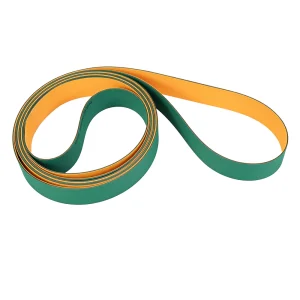
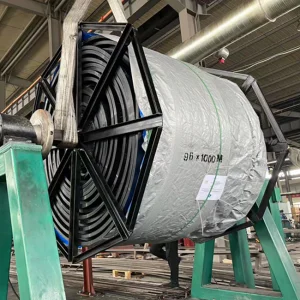
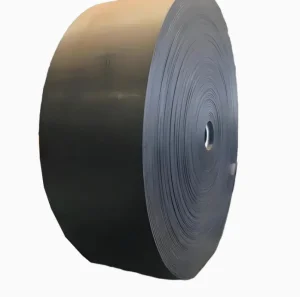
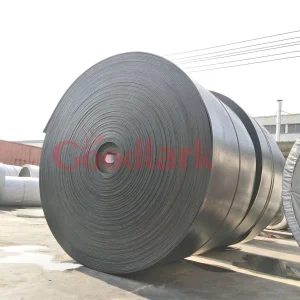
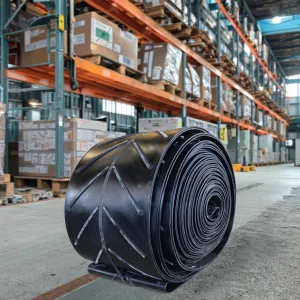
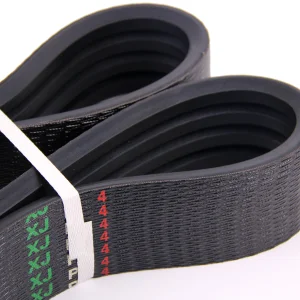
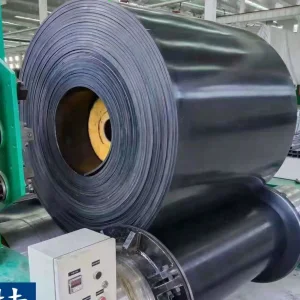
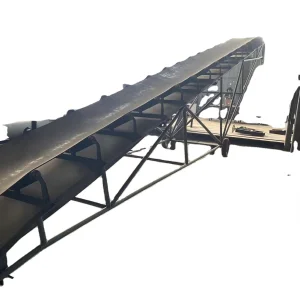
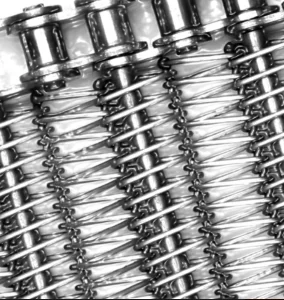
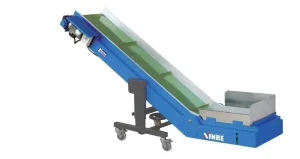
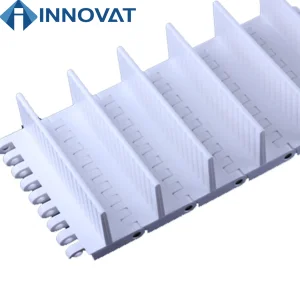
Premium-grade industrial conveyor belts manufactured with high tensile properties, thermal stability, and wear resilience for global infrastructure projects.
In high-capacity material handling systems, conveyor belt alignment represents a primary variable in mechanical longevity and system efficiency. Belt misalignment, or tracking deviation, occurs when the longitudinal centerline of the conveyor belt wanders away from the structural centerline of the conveying framework. The engineering consequences of this drift are severe: lateral edge wear, structural damage to conveyor frameworks, component degradation of return idlers, and catastrophic material spillage. Correct alignment is not merely a maintenance task; it is a fundamental thermodynamic constraint for optimizing energy consumption and material throughput.
Understanding the physics of misalignment requires analyzing force vectors acting upon the moving belt. When a belt moves across pulleys and idlers, it must remain perpendicular to the axes of these rotating cylinders. If an idler is skewed—even by a fraction of a degree—the friction between the belt and the roller generates a lateral force vector ($F_l = F_t \times \sin(\theta)$). This lateral force guides the belt toward the side of first contact. Consequently, utilizing precision laser alignment tools during construction and periodic operation is critical for minimizing this skew angle ($\theta$) across thousands of linear meters of heavy industrial conveyor systems.
Furthermore, structural misalignment is often compounded by transient dynamics, such as uneven material loading, temperature gradients, or structural settlement of the plant foundation. An off-center load exerts a non-uniform pressure profile, altering the tension profile across the width of the belt. As a result, the belt drifts toward the side with lower tension. The deployment of robust mechanical and laser alignment tools, combined with modern structural monitoring technology, enables operations managers to diagnose structural deviations before minor tracking anomalies escalate into massive component failures or costly unplanned shutdowns.
Empirical metrics highlighting the structural and financial benefits of precision laser belt tracking.
Modern industrial facilities—including chemical processing plants, open-pit mines, logistics hubs, and ports—are transitioning to high-speed, high-tension conveyor operations to maximize material throughput. This paradigm shift requires highly sophisticated maintenance procedures. Historically, tracking adjustments were performed reactively by line technicians using manual visual checks. Today, global enterprises require proactive maintenance programs supported by digital alignment systems, laser-guided pulley co-linear calibration, and real-time electronic monitoring devices.
In regions such as North America, Europe, and the Middle East, environmental, health, and safety (EHS) standards have become key drivers for advanced alignment technology. Under regulatory guidelines like OSHA, MSHA, and EU directives, industrial operations are held accountable for fugitive dust emissions and material spillage resulting from misaligned conveyor paths. In food processing and pharmaceutical packing facilities, compliance with FDA, USDA, and EU Regulation 1935/2004 dictates that conveyances prevent any oil leakage or edge fraying that could contaminate product lines. Consequently, aligning conveyor belts is now a regulatory necessity to ensure clean, contamination-free processing environments.
Technologically, the integration of Industry 4.0 has introduced automated self-aligning idlers and sensor-equipped pulley systems. These smart assemblies monitor edge positions and dynamically shift the angle of the idler frame to offset structural deviations. However, even the most advanced automated tracking components rely on a correctly calibrated baseline conveyor framework. Achieving this baseline requires high-precision optical and laser-based tools to ensure that head, tail, and take-up pulleys are aligned relative to the longitudinal centerline of the conveyor frame. China’s advanced manufacturing sector has quickly adapted to these demands, designing and exporting high-precision, robust laser alignment kits that withstand harsh industrial conditions.
Utilizes multi-beam laser line projection to instantly detect horizontal and vertical misalignments between driving and driven pulleys, ensuring zero tension variance across the belt cross-section.
Embedded edge sensors continuous monitor belt-edge contact margins, triggering automatic micro-adjustments within active return idler systems to mitigate dynamic tracking errors.
Pivoting tracking systems that respond directly to the friction forces of a drifting belt, automatically re-centering the belt without requiring auxiliary power inputs.
In global manufacturing, China’s industrial conveyor and alignment tool sector has progressed from basic components fabrication to high-precision engineering under the Smart Factory 4.0 initiative. Factories like Dongguan Trakkx Tech Co., Ltd. represent this transition. Trakkx Tech combines advanced engineering, automated structural machining, and strict quality assurance protocols to supply high-performance conveyor systems, modular belts, and alignment tools that meet rigorous global standards.
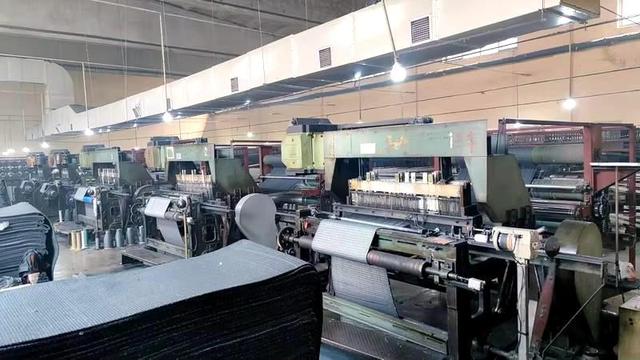
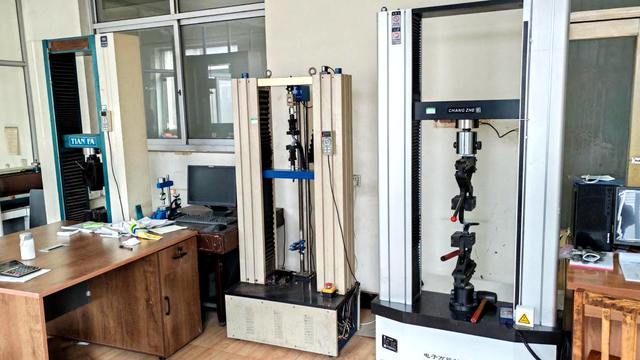
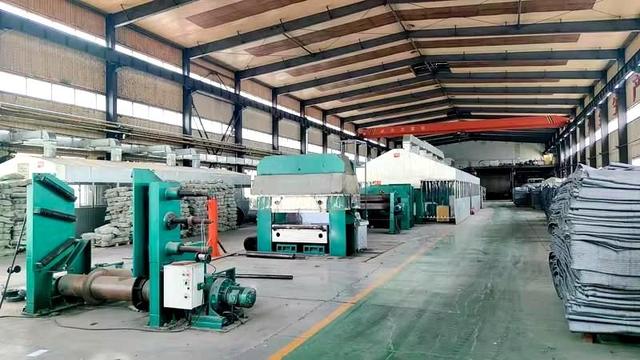
The manufacturing capabilities of Dongguan Trakkx Tech Co., Ltd. are designed to handle both standard configurations and highly customized OEM/ODM projects. Their facility features modern machining centers, automated vulcanization systems, and precise CNC equipment for pulley fabrication. By using state-of-the-art diagnostic equipment, Trakkx Tech tests every product under realistic tension and load dynamics. This ensures that every conveyor assembly leaves the factory within exact dimensional tolerances, significantly reducing site installation times and alignment issues for global end-users.
Supply chain resilience is another major advantage for international buyers partnering with Chinese exporters. Situated in Dongguan, the logistics capital of the Pearl River Delta, Trakkx Tech benefits from access to raw materials, advanced sub-component manufacturers, and deep-water ports in Shenzhen and Guangzhou. This cluster effect helps insulate global procurement agents from supply chain disruptions, stabilizes manufacturing lead times, and allows Trakkx Tech to deliver high-quality conveyor belts and alignment systems to markets across North America, Europe, Southeast Asia, and the Middle East.
Different operating conditions demand tailored alignment and structural designs to ensure consistent tracking stability.
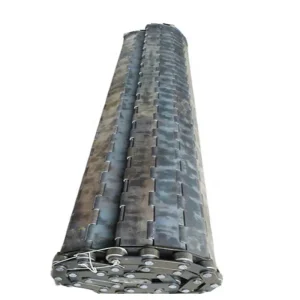
In high-capacity mining and bulk wharf terminals, conveyor belts carry massive, abrasive, and unevenly distributed loads across long spans. Using high-tensile steel cord rubber belts requires precise, heavy-duty self-aligning return idlers and laser pulley alignment tools. This equipment prevents premature carcass fatigue and structural damage from unexpected belt drift caused by wind, rain, and uneven loading.
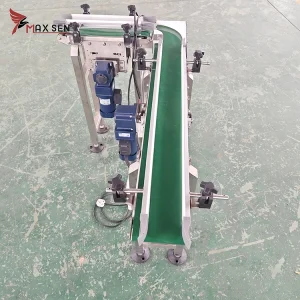
In food-grade environments, handling raw products requires stainless steel framing and food-grade PU or PVC modular conveyor belts. The primary concern is preventing bacteria buildup and material contamination. Misalignment can scrape belt edges, generating microscopic particles that ruin batches. Implementing precise tracking controls helps food facilities maintain sanitization standards and prolongs belt service life.
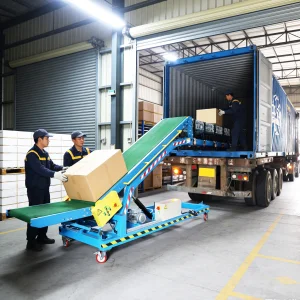
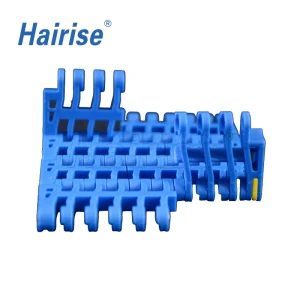
Distribution hubs process millions of parcels daily using high-speed, variable-speed conveyor systems. Dynamic package weights and continuous start-stop cycles place high stress on mechanical alignments. Using specialized modular mesh belts and telescopic unloading systems helps warehouses prevent material jams, reduce energy consumption, and maintain high sorting efficiency.
Comprehensive technical answers to common questions about industrial conveyor belt alignment, tracking issues, and maintenance strategies.
A look inside our modern fabrication workshops, testing centers, and engineering facilities.
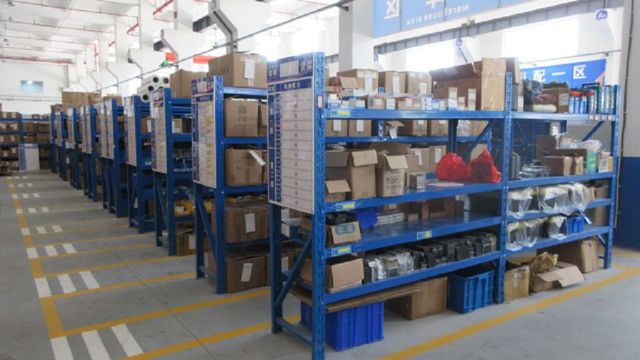
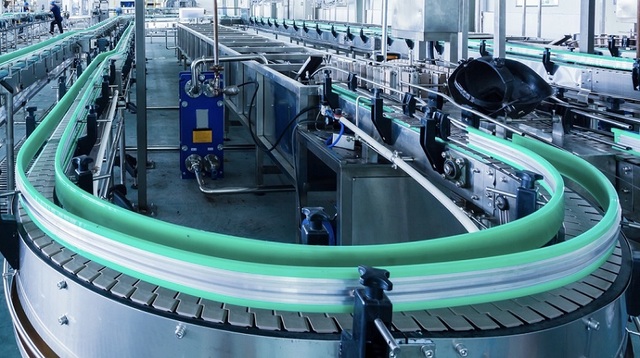
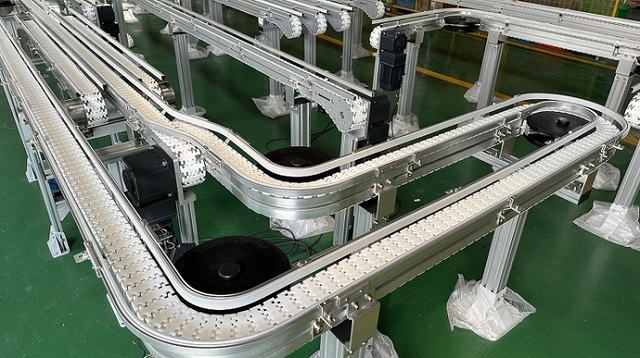
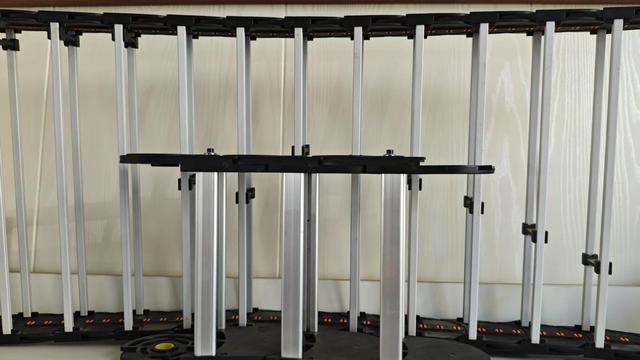
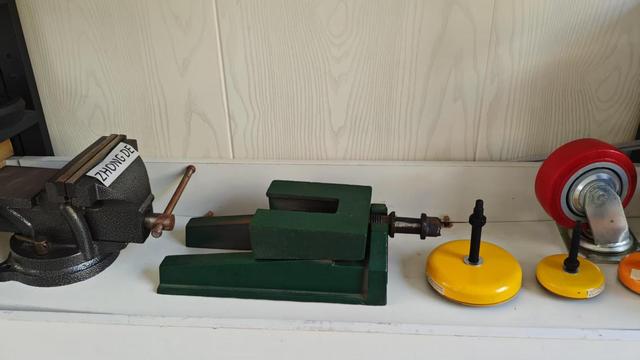
Explore our selection of specialized modular belts, high-temperature wire mesh belts, and automated loading systems.
 Trakkx Tech