Trakkx Tech
1 / 5
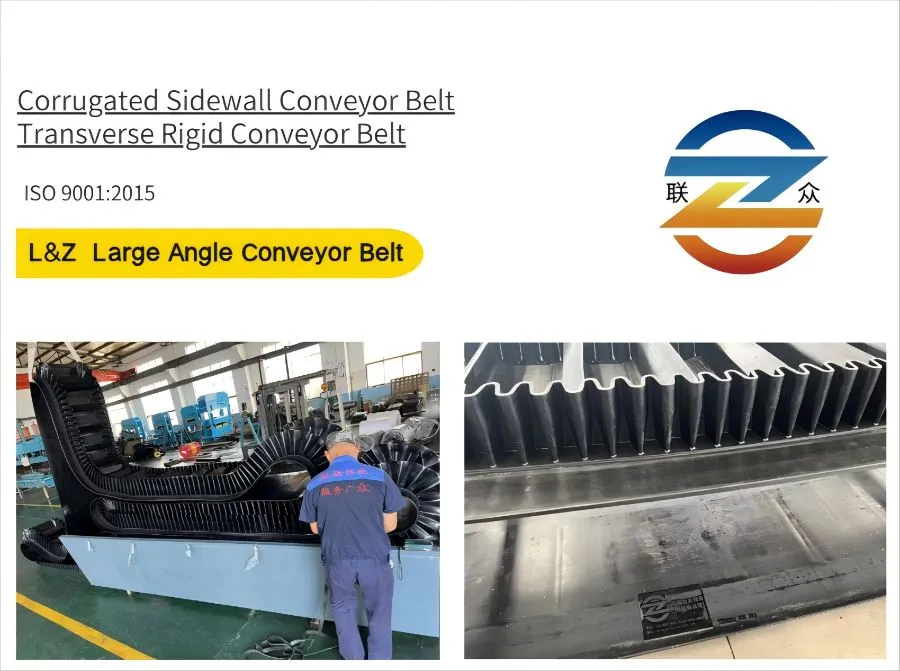
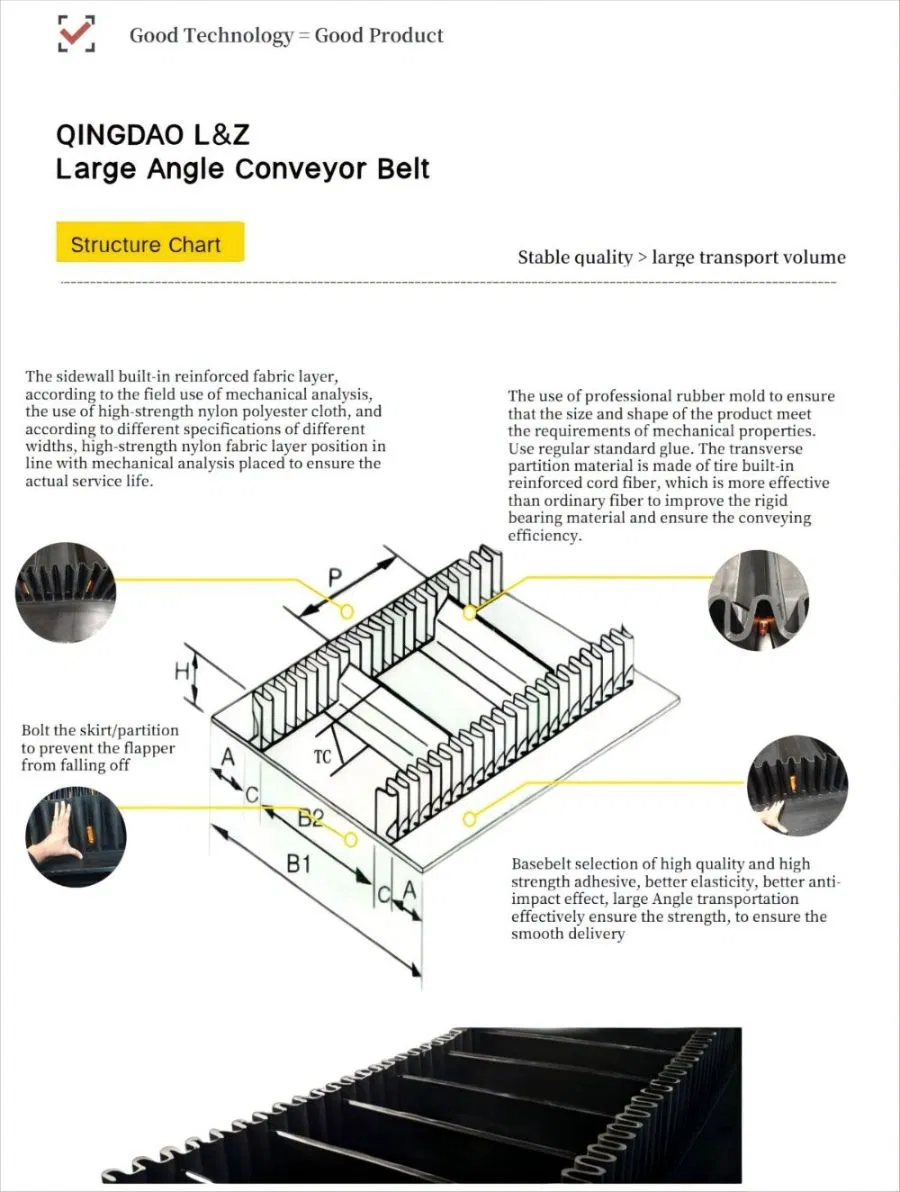
| Sidewall height (mm) | 40 (S) | 50 (S) | 60 (S) | 80 (W) | 100 (S) | 120 (S) | 160 (S) | 200 (S) | 240 (S) | 300 (S) |
| Sidewall weight (kg/m) | 0.8 | 1.35 | 1.5 | 1.7 | 2.0 | 2.2 | 3.9 | 4.9 | 5.2 | 6.5 |
| Cleat height (mm) | 55 (TC) | 70 (T) | 75 (T/TC) | 90 (TC) | 110 (TC) | 140 (TC) | 180 (TC) | 220 (TC) | 280 (TC) | 320 (TC) |
| Cleat weight (kg/m) | 1.2 | 1.3 | 1.5 | 1.7 | 1.9 | 2.5 | 5.1 | 7.1 | 8.7 | 10.1 |
| Base belt width (mm) | 500 - 1400 | |||||||||
| Sidewall | S40 | S50 | S60 | W80 | S100 | S120 | S160 | S200 | S240 | S300 |
| Belt width (mm) | 25 | 50 | 50 | 50 | 50 | 50 | 75 | 75 | 75 | 105 |
| Height (mm) | 40 | 50 | 60 | 80 | 100 | 120 | 160 | 200 | 240 | 300 |
| Limit deviation (mm) | ±1 | ±2 | ||||||||
What are the primary applications of a sidewall conveyor belt?
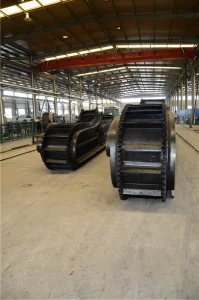
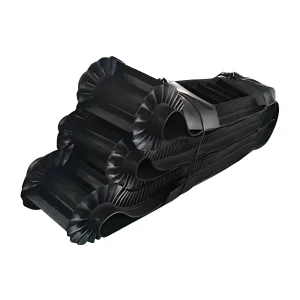
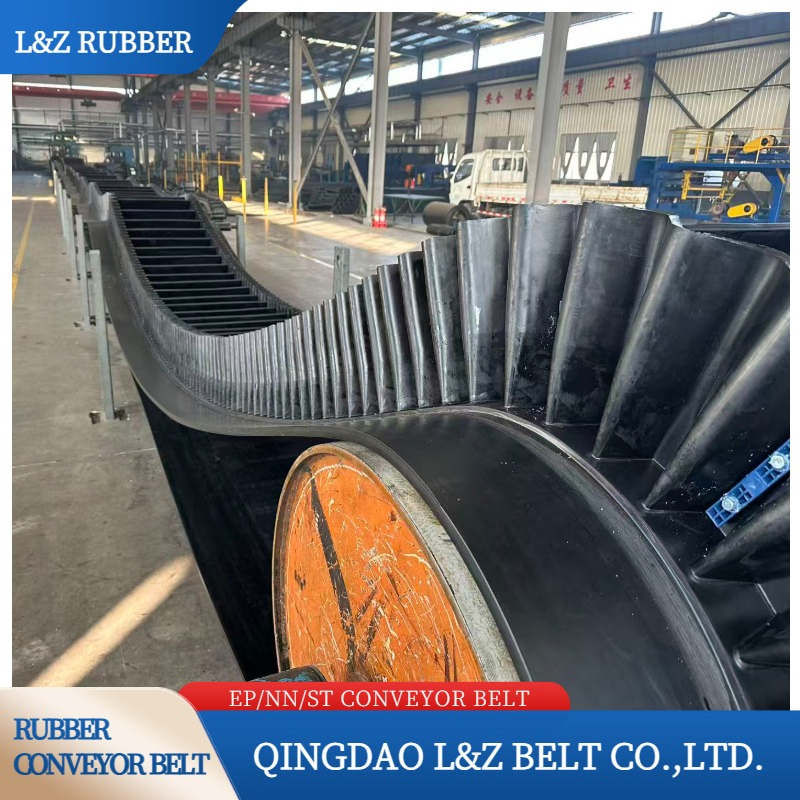
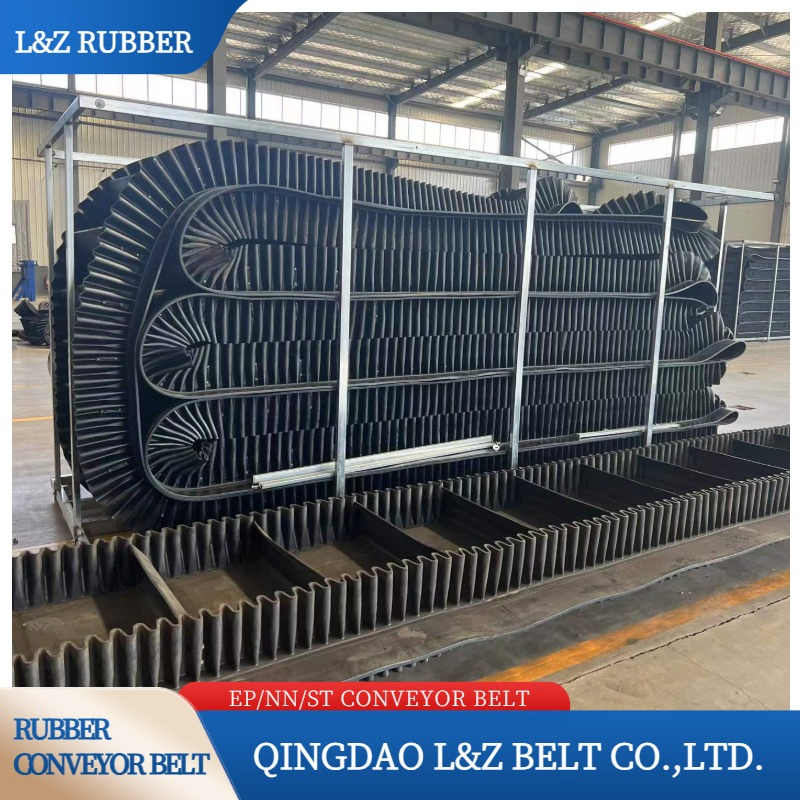
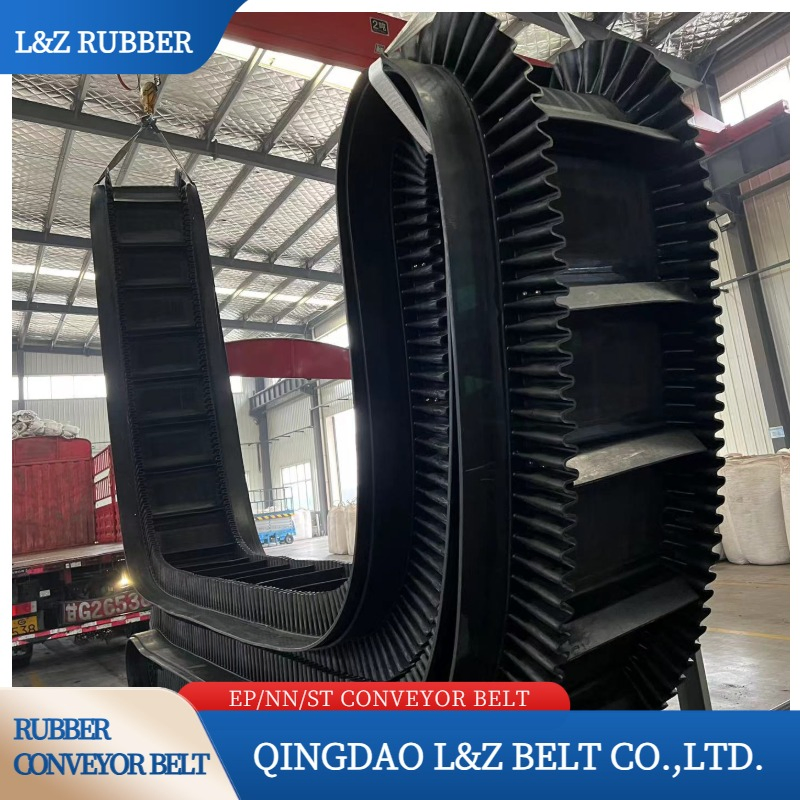
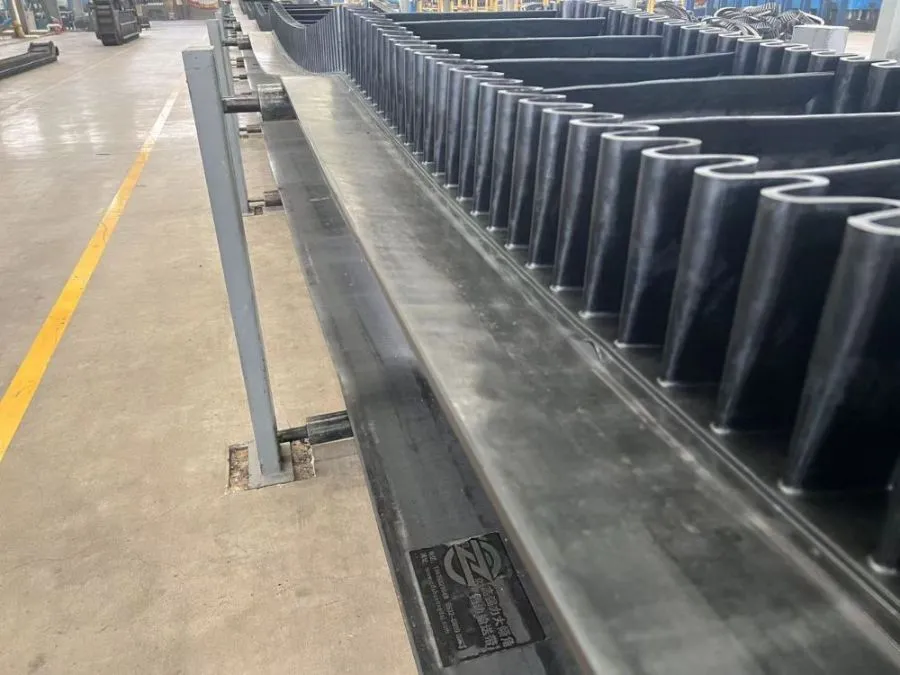
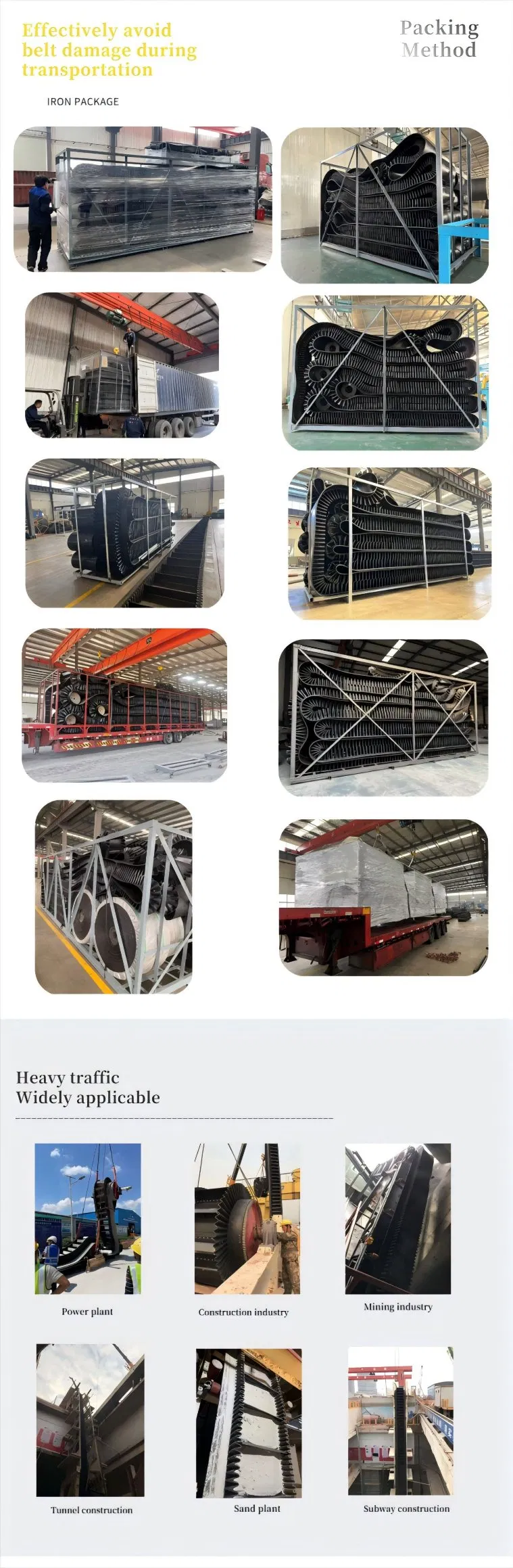
Sidewall conveyor belts are widely used for the transportation of bulk materials at steep angles from 0° to 90°. Common industries include building materials, chemicals, mining operations, ports, and grain processing facilities.
What are the key advantages of using a sidewall conveyor belt over standard flat belts?
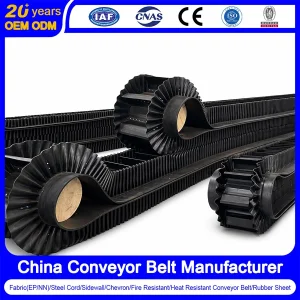
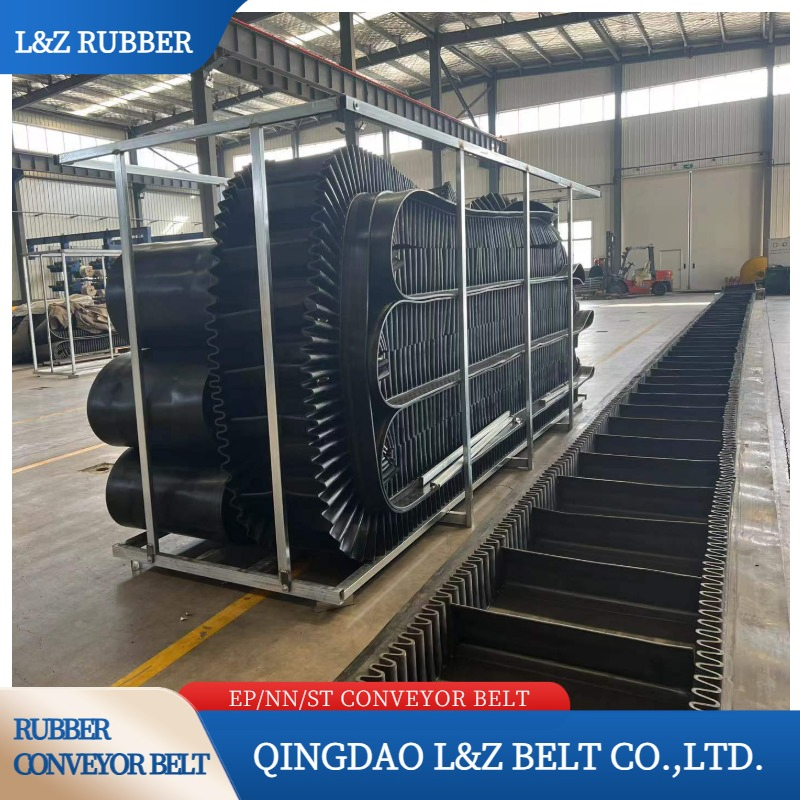
Unlike flat belts, sidewall conveyor belts allow large angle transportation (up to 90° vertical lifts). This drastically reduces the land footprint, saves on initial civil engineering investment, minimizes maintenance costs, and prevents material spillage.
What range of sidewall and cleat dimensions do you offer?
Sidewall heights typically range from S60 to S300, and cleat heights range from 55mm to 280mm (offering both T and TC cleat patterns). This adapts to varying transport capacities and steep conveyor angles.
What specific compound features do these conveyor belts possess?
Depending on the application requirements, the belts can be formulated with high-performance physical properties: including oil-resistance, acid and alkali resistance, high tear-resistance, heat-resistance, cold-resistance, and heavy-duty wear-resistance.
What materials can these conveyor belts transport?
They are suitable for transport systems handling powders, granules, and small blocks. Examples include coal, heavy ores, sand, chemical fertilizers, grain crops, and other building aggregates with particle sizes up to 400mm.
What is the standard inner material and structure of the base belt?
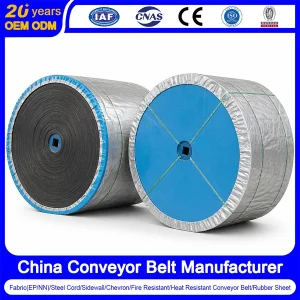
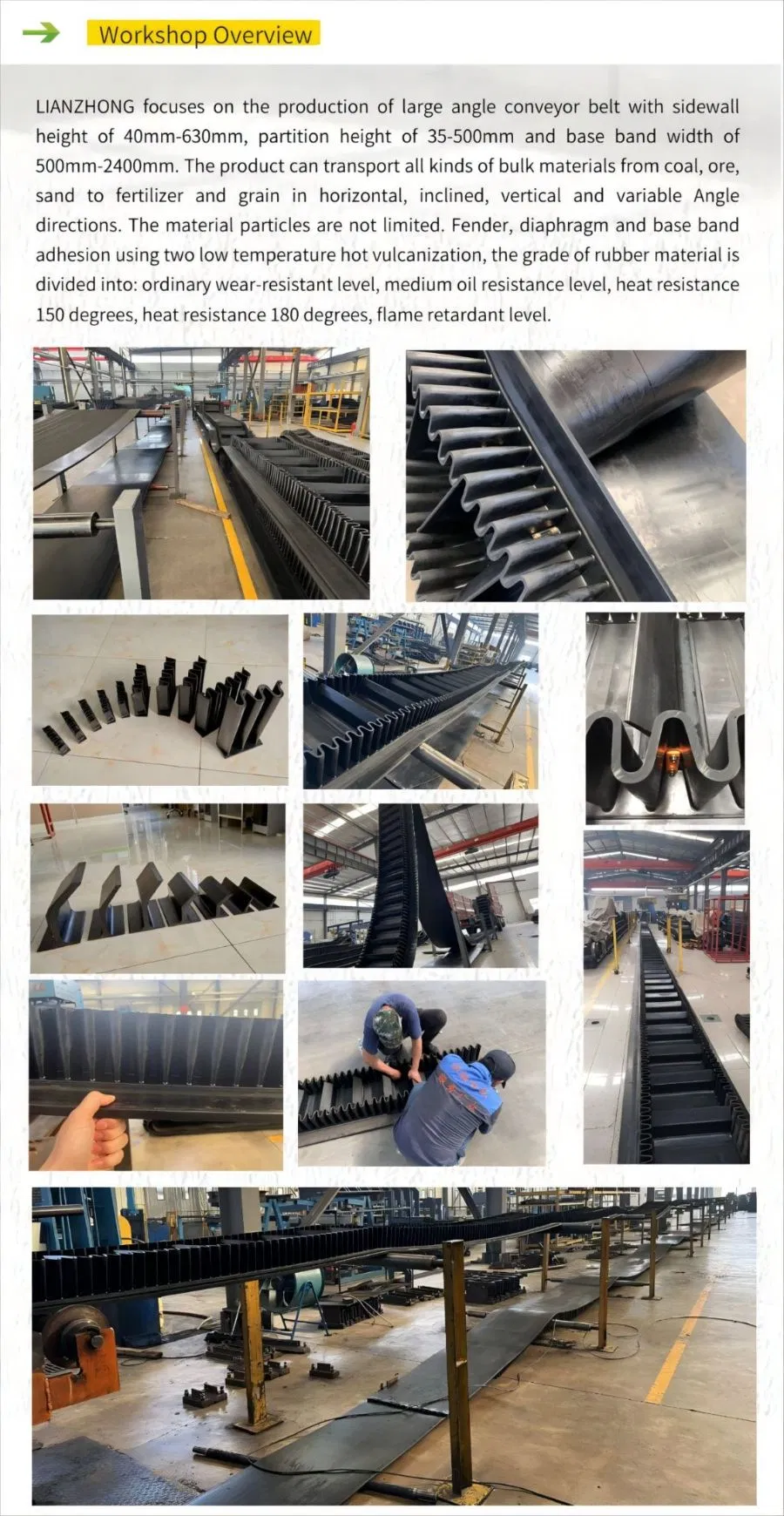
The base belt utilizes high-quality polyester (EP) fabric as the core reinforcement material, which provides high tensile strength and minimal stretch. Custom specifications like B500, B650, B800, and B1000 are available in width ranges from 500mm up to 1200mm.